Skip Sub Menu

Tim Knepper
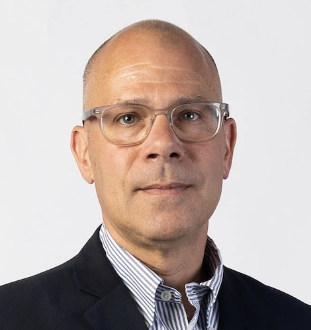 Professor of Philosophy
Director, The Comparison Project
Office Location: 203 Medbury Hall
(515) 271-2167
Timothy Knepper is a Professor of Philosophy at Drake University, where he directs The Comparison Project, a public program in comparative philosophy of religion, the study of local-lived religion, and the cultivation of interfaith leadership. He is the author of books on the future of the philosophy of religion (The Ends of Philosophy of Religion, Palgrave, 2013) and the sixth-century Christian mystic known as Pseudo-Dionysius the Areopagite (Negating Negation, Wipf & Stock, 2014), as well as a textbook in “global-critical philosophy of religion (Philosophies of Religion: A Global and Critical Introduction, Bloomsbury, 2022). He is also the editor of student-written, photo-narratives about religion in Des Moines (A Spectrum of Faith, Drake Community Press, 2017) and in Beijing (Religions of Beijing, Bloomsbury, 2020), as well as The Comparison Project's lecture and dialogue series on ineffability (Ineffability: An Exercise in Comparative Philosophy of Religion, Springer, 2017), death and dying (Death and Dying: An Exercise in Comparative Philosophy of Religion, Springer, 2019), miracles (Miracles: An Exercise in Comparative Philosophy of Religion, Springer, 2022), and transhumanism (Transhumanism and Immortality: An Exercise in Comparative Philosophy of Religion, Springer, forthcoming). He co-founded and currently serves on the advisory board of the Global-Critical Philosophy of Religion program unit for the American Academy of Religion.
The Comparison Project programming currently consists of a biennial (2024–26) lecture series on religion and disability, monthly site visits to local places of worship (“Meet My Religious Neighbor), an annual Interfaith Youth Leadership Camp in the summer, and occasional Iowa Interfaith Conferences.
Tim's current research projects include monograph in the rhetorics and politics of ineffability in twentieth-century mysticism studies (currently under review). He is also editing, contributing to, and concluding over a couple dozen scholarly essays on reimagined questions, topics, and categories for global-critical philosophy of religion.
A&S News

January 15, 2026
November 25, 2025
A&S Calendar