Skip Sub Menu

Student Learning Outcomes & Alumni Spotlights
Learning Outcomes
Our students learn to read and write texts in a variety of modes and genres. They read and write imaginatively, critically, analytically, and interpretively, with close attention to detail, and they situate their reading and writing within established and contested historical, cultural, critical, and literary traditions. They understand that reading and writing are deeply inter-related activities, whether their major emphasizes the production or the reception of texts.
Our students learn to think, read, and write collaboratively, sharing their work with others and drawing on their individual and collective knowledge, experience, wisdom, understanding, and background to advance their learning. They become adept at working creatively and effectively with others, through dialogue, debate, and critique.
Our students come to English and writing from a broad range of backgrounds, with a variety of beliefs, motivations, and tastes, to pursue a broad range of personal, professional, and expressive goals. Our faculty are co-learners with our students, taking active part in the challenging and rewarding practices of critical literacy and creative writing.
Our students develop into culturally aware users of language, attuned to the way language and the variety of meanings to which it gives rise change and respond to contemporary developments, including the political, social, technological, and aesthetic. They learn to question and reflect on these changes and to adapt their readerly and writerly sensibilities to address them.
Our students develop the desire to better understand themselves and their world through language, as exploratory writers and inquisitive readers. They are able to achieve that understanding by using language in critical and imaginative ways to advance their learning throughout their lives.
Our students become reflective and informed readers, able to generate and pursue complex questions of language’s meanings and uses. By focusing on textual details in relation to larger questions of form, purpose, and context, our students are able to articulate well-reasoned understandings of the language they encounter.
Our students learn to take pleasure in the play of language and other representational, symbolic systems of thought and expression. They value novelty and experimentation, both in their critical and writerly endeavors, and become adept at seeing and pursuing opportunities for playful engagement with language and meaning.
Our students are able to contend with ambiguity and respond meaningfully and responsibly to changes in the way language functions, whether in its literary or everyday manifestations.
Our students develop the critical and creative wherewithal to recognize that language and representation are complex and important, wherever they manifest themselves. They are able to use the critical and creative approaches for thinking about film, drama, new media, novels, stories, poems, and other literary artifacts to analyze and reflect on symbolic representation of all kinds, from popular music to painting to political discourse and beyond.
Alumni
Evan Sundermeyer, English major and Computer Science major, Class of 2019
Originally from St. Louis, Missouri, Evan Sundermeyer received a Bachelor of Arts in English and Computer Science from Drake University in 2019. After several years of working as a software developer, he moved to Columbia, South Carolina, to pursue an MFA in creative writing, which he completed in 2024. Currently, Evan teaches in the First-Year English program at the University of South Carolina, where he spends most of his free time working on speculative fiction stories.
Gabby LeFevre, English major and Biology major, Class of 2019
Following her 2019 graduation from Drake with a BA in English and a BS in Biology, Gabby moved to Florida to pursue a career in marine biology. After five seasons of sea turtle nesting work, including four months in Equatorial Guinea, she was accepted into an MS Biology program at Austin Peay State University in Tennessee. While there, she investigated the effects of climate change and invasive species on tall-grass prairies. Gabby was proud to find her writing skills were the strongest in her cohort and has two research publications in press. She now works as an ecologist in Little Rock, AR at the Southeastern Grasslands Institute where she travels across the south documenting diverse grassland communities. She uses her English degree every day to tell the story of grasslands in the southeast, all of which are under threat. Gabby still channels her literary criticism training in her Goodreads book reviews and in two book clubs where she's known as "the snob."
Annie Matte, English Major and Journalism & Mass Communication Major, Class of 2018
After graduating cum laude from Drake with bachelor’s degrees in English and journalism & mass communication, Annie worked as communications & voting outreach coordinator at Disability Rights Iowa (DRI). During her time with DRI, Annie spearheaded an awareness campaign for voter accessibility during the 2020 Iowa caucus and election season that received national attention. Annie’s next position as a communications specialist with Strategic America enabled her to work with a wide variety of clients—including DMPS, ACSD, Pella, A&E Dairy, and more—on strategic communications plans. She is currently at the Drake School of Education as communications & marketing manager, where she is thrilled to give back to her alma mater.
Sara Filo, English Major, Class of 2017
 Sara Filo graduated from Drake with my BA in English in 2017. After undergrad, she attended the University of Minnesota Law School and obtained her JD and attorney licensure in 2020. She spent the next five years practicing law as a civil litigator in Minneapolis. Sara recently transitioned from a career in private practice to an in-house role at M.A. Mortenson Company, a national builder known for constructing sports and entertainment venues as well as renewable energy projects. Sara husband live in Minneapolis with their dog, Milly, a neurotic but deeply lovable mystery mutt.
Lindsey Wharton, English major and Secondary Education major, Class of 2008
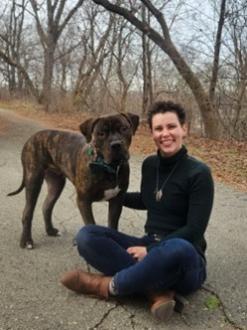 Lindsay entered Drake with a clear focus. She pursued degrees in secondary education and English in pursuit of her goal to be a high school English teacher and basketball coach. At the encouragement of one of her English professors, she applied for and was awarded a Rhodes Scholarship. At Oxford, she earned an MPhil in Comparative Social Policy and DPhil in Social Policy. Her research explored the role of teachers’ unions in shaping educational reform efforts across three countries: Finland, Switzerland, and the United States. She spent the final year of her doctoral research in Helsinki, Finland as a Fulbright Scholar.
After graduate school, Lindsay served as legislative director for then-Colorado state senator, Mike Johnston (now mayor of Denver). She also worked as a consultant for two years at the Boston Consulting Group, before joining the founding team of The Holdsworth Center, the education non-profit in Austin, Texas she has led since 2019. Under Lindsay’s leadership, Holdsworth has grown from serving seven public school districts through its initial offering—the Holdsworth Partnership—to serving more than 1,900 leaders in 89 public school districts across several programs, all designed to build stronger leaders for Texas public schools. She is the author of two books: Teachers’ unions and education reform in comparative contexts (Routlege 2016) and A new school leadership architecture: A four-level framework for reimagining roles (Corwin Press, forthcoming).
Lindsay’s career has played out differently than what she thought she was preparing for as an undergraduate at Drake. But though the path has looked different, the mission has not changed: to advance public education and work to ensure that every child has the opportunity to fulfill their full potential. Her English degree prepared her for a very unusual career path. At Drake, she learned to read and think critically, to synthesize information and distill what matters, and to communicate. She learned to discern what is true and to navigate and hold uncertainty. These skills and dispositions have shaped her work at each stage, from policy analysis to politics to strategy to leading an organization.
A&S Calendar 

A&S News

January 15, 2026
November 25, 2025

