Skip Sub Menu

Hall of Achievement
The Drake University Law School Hall of Achievement stands as a tribute to the enduring legacy of the institution's most impactful graduates and visionary leaders. Individuals are chosen because their lives exemplify "putting law into action," demonstrating that the true measure of a legal education is the positive change one brings to the community and the justice system.
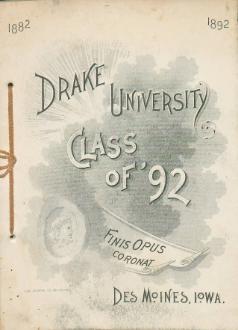
Albert Lincoln Bell
LW'1892 | d. 1949 Believed to be the first Black graduate of Drake Law School.
Albert Bell graduated in 1892 as the presumed first Black alumnus of Drake Law School. Shortly after his graduation, he was admitted to the Iowa bar and established a practice in Des Moines, handling both civil and criminal litigation for eight years. A dedicated member of the community, Bell was also a fixture in local politics, participating in Republican clubs and conventions throughout Polk County.
He later relocated to Sheridan, Wyoming, to operate a messenger and delivery business. Bell was the brother of Turner W. Bell, a noted legal orator. Born on December 25, 1862, just one week before the Emancipation Proclamation, Bell was born into slavery, a testament to his remarkable journey from his parents' enslavement to the legal profession.
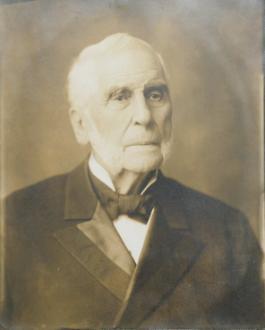
Chester Cole
d. 1913 Co-founder of Drake Law School.
After moving to Iowa from Kentucky in 1857, Chester Cole became one of Des Moines' most respected and successful attorneys. He served on the Iowa Supreme Court from 1864 to 1876, including a term as Chief Justice. In 1865, alongside Justice George Wright, he founded Des Moines’ first law school that would become Drake University Law School, later serving as its dean from 1892 to 1907.
Justice Cole is best known for authoring the landmark 1868 opinion in Clark v. School Board Directors, which ruled that racial segregation in public schools violated the Iowa Constitution. Defending a 12-year-old girl denied entry to her Muscatine school based on her race, Cole famously wrote, “the law makes no distinction” regarding a child's right to attend public schools.
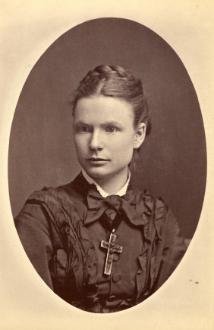
Martha Angle Dorsett
LW'1876 | d. 1918 First woman graduate of Drake Law School.
Martha Angle Dorsett made history in 1876 as the first woman to graduate from Drake Law School. Upon moving to Minnesota, her application to the bar was initially rejected due to her gender. Rather than relenting, she successfully campaigned to change the state statute that restricted legal practice to men.
In 1878, she became the first woman admitted to the Minnesota bar. Beyond her legal milestones, Dorsett was an active leader in the suffrage and prohibition movements.
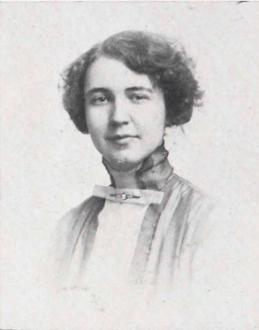
Bernice Opal Boling Marquardt
LW'1915 | d. 1963 First woman lawyer to argue before a Polk County jury.
After graduating from Drake Law School in 1915, Bernice Opal Boling Marquardt left behind a prolific campus legacy. As a student, she was a class secretary and Model Senate member who balanced her legal studies with basketball, theater, and yearbook staff duties.
Within just three years of graduation, she achieved two major legal "firsts": in 1916, she became the first woman to argue before a Polk County jury, and in 1918, she became one of the first women to present a case before the Iowa Supreme Court – an appeal she successfully won. She continued her legal practice in Des Moines until 1924.
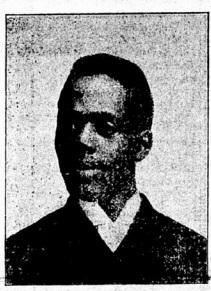
Isaac E. Williamson
LW'1895 | d. 1927 Born into slavery; early Black graduate of Drake Law School.
Born into slavery in Arkansas in 1852, Isaac Williamson was adopted by Company G of the 18th Iowa Infantry during the Civil War, serving as a captain’s cook until his discharge in 1865. He pursued an education while working farm jobs in Iowa, eventually becoming the first Black graduate of West Des Moines High School in 1881.
Williamson graduated from Drake Law School in 1895. That same year, he was admitted to the bar and formed a partnership with William Foster. A staunch defender of civil rights, he and John Lay Thompson filed suit against a local lunch house in 1900 for discriminatory pricing. In 1901, he became a founding member and the elected vice president of the Negro Bar Association of Iowa. He later moved to Washington, D.C., where he practiced law and held various leadership roles in social societies.
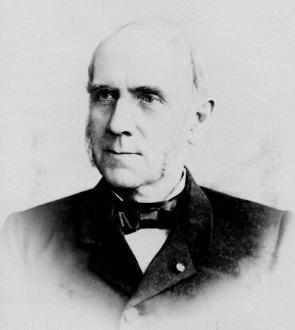
George Wright
d. 1896 Co-founder of Drake Law School.
George Wright moved to Keosauqua, Iowa, in 1840, serving one year as a prosecuting attorney for Van Buren County (1847–1848) and a member of the Iowa Senate from 1849 to 1851. He served on the Iowa Supreme Court for 16 years (1854–1870), including seven years as Chief Justice. In 1865, Wright co-founded the law school at Drake University with Chester Cole.
Wright’s influence extended to the national stage as Iowa’s U.S. Senator (1871–1877), where he served on the Judiciary Committee and helped shape the Civil Rights Act of 1875. He concluded his distinguished career as the President of the American Bar Association from 1887 to 1888.
Law School Calendar 

Law School News

