Skip Sub Menu

Our Campus
Across campus, we strive to incorporate sustainable practices into our everyday operations.
From facilities and grounds to campus dining, we utilize products and practices that cut down on environmental harm and unnecessary waste so we can minimize Drake's impact.
Sustainability Plan
The Drake Sustainability Plan was put together in 2023 by the Office of Sustainability with input from partners across campus. This 10 year plan outlines where the campus currently stands from a sustainability perspective, and provides action items in order to continue hitting our goals. This plan will be revisited every 5 years to judge progress made and adjust action items.
Renewable Energy
Drake is continuously looking for ways to increase renewable energy generation on campus and decrease the carbon footprint.
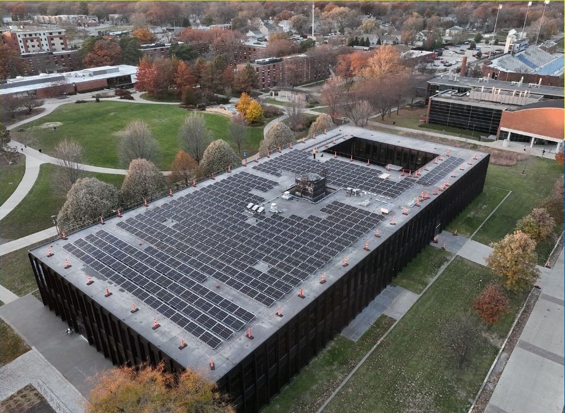
The first solar project was implemented in 2019 at the Roger Knapp Tennis Center. There is a 128.02 kW solar array that effectively makes the Tennis Center a Net-Zero Building. You can track in-time energy generation here.
Drake's second renewable energy project is the 48.7 kW solar installation at the Tom and Ruth Harkin Center. Installed in 2021, you can track live in time energy production here.
The third solar project is the 125 kW solar array on the roof of Meredith Hall as a part of the 2023 revitalization. Track in-time energy production here.
The most recent solar project is the 100 kW solar array on the roof of the Johansen Student Center. This project was done as part of a remodeling of the Morehouse Residence Hall into the Student Center, which was possible due to a generous gift from Greg and Cie Johansen. Track in time energy production here.
Facilities and Grounds
Drake is committed to creating a sustainable campus through the implementation of practices that align with our goals of economic, environmental, and social sustainability. Drake has established a goal of achieving at least LEED Silver or Two Green Globes certification on all new campus construction. LEED, or Leadership in Energy and Environmental Design, and Green Globes represent rating systems and guidance for green building design, operation, and management that ensure projects meet high standards of environmental, water, and energy efficiency. In addition, the Facilities Services staff use green cleaning products that do not contain many of the toxins used in traditional cleaners and time lawn sprinklers to run during periods of the day when evaporation is minimal. The grounds team works hard to maintain a sustainable campus to ensure Drake is recognized by Tree Campus Higher Education. This honor has been received every year since 2011.
Reducing, Reusing, Recycling
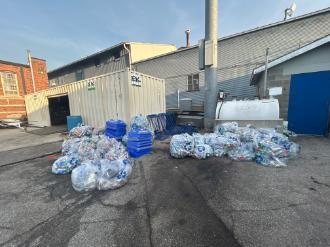
Drake has been a leader in adopting recycling measures across campus including utilizing a single-stream recycling system, recycling our waste oil, collecting and recycling refuse after athletic events, “demanufacturing” old appliances, and composting uneaten food at the dining hall. The University is also aiming to reduce printing in every area. Toward that effort, we are already converting to electronic schedules and media guides in athletics, installing new LCD screens for menus and announcements, encouraging faculty to post handouts online, and issuing all University billing statements electronically.
The Office of Sustainability collects E-waste for proper recycling. Head to the Resources page to find more information!
During the Drake Relays, the Office of Sustainability organizes the Relays Recycling program. This program diverts hundreds of cans an bottles from landfills each Spring. Head to DUgood in the Spring to sign up to volunteer for this initiative!
Campus Dining
Drake Dining is taking several steps to improve sustainability such as purchasing local foods when possible, serving fair-trade coffee, eliminating trays to limit food waste, composting food scraps, and donating excess food to community organizations through student-run Next Course. Drake Dining's sustainability initiatives also include the introduction of reusable containers in The Hubb, which have helped reduce waste significantly.
Native Planting
There are native planting sites across Drake's campus, providing homes to migrating butterflies and insects while increasing the biodiversity and beauty of our campus.
The largest site is known as the Drake Prairie, which sits between Cline Hall and Meredith. This vibrant prairie is an educational tool to teach our campus about the importance of prairie in Iowa. Often seen in the prairie are Monarch butterflies and some bumblebees, who love the flowers and plant diversity.
Nearby is the Olin Prairie, which sits on the Ray Promenade between Olin and the parking lot. This prairie serves a similar purpose, and is used by classes to track migrating monarch butterflies.
The Bioretention Cell sits in front of Harvey Ingham, and was planted in 2023. This project was possible due to funding from an IDALS grant applied for by students. This installation was built to filter stormwater runoff and mitigate flooding.
The GK Native Planting site was installed by the Fall 2024 Restoration Ecology class led by Dr. Keith Summerville. This planting addresses drainage problems in the area with hardy plants, decreasing the maintenance needs.
Green Building Certifications
Drake University has set a goal to achieve at least 2 Green Globes on every new construction project or renovation.
The Harkin Institute was the first building in the state of Iowa to achieve a rating of 3 Green Globes.
What does a Green Globes certification mean?
Administered by the Green Building Initiative (GBI), Green Globes is a nationally recognized green rating assessment and certification tool that ensures projects meet high standards in environmental, water, and energy efficiency. The certification demonstrates the University’s commitment to environmental sustainability.
Buildings with Green Globes Certification:
- Harkin Institute (3)
- Collier Scripps (2)
- Science Connector Building (2)
- Meredith Hall (2)
- Burt Boys and Girls Club (2)
University Calendar 

University News

March 17, 2026
