Andrew Miesner, PharmD, BCPS
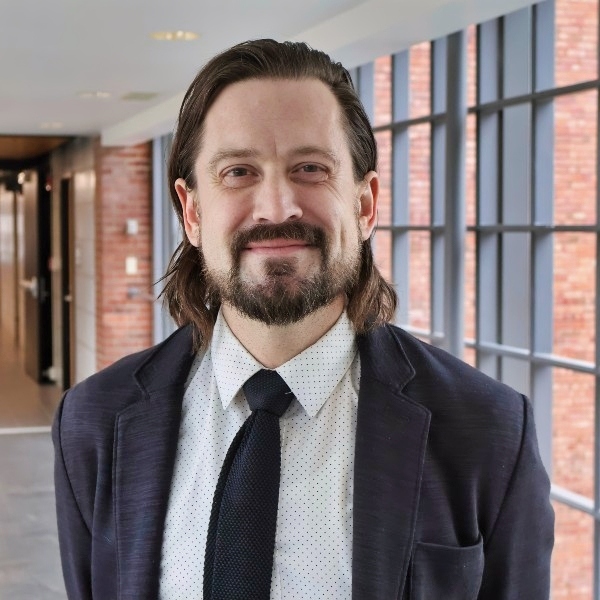
Professor, Pharmacy Practice
College of Pharmacy & Health Sciences
Phone: 515-271-2775
Email: andrew.miesner@drake.edu
Biography
PROFESSIONAL AFFILIATIONS
- Iowa Pharmacy Association (IPA)
- American College of Clinical Pharmacy (ACCP)
- Adult Medicine PRN member
- Infectious Disease PRN member
- Society of Infectious Disease Pharmacists (SIDP)
- Rho Chi Society – Alpha Sigma Chapter
- Phi Lambda Sigma – Alpha Upsilon Chapter
CURRENT CLINICAL SERVICE ENGAGEMENTS
- Broadlawns Medical Center
- Internal Medicine Clinical Pharmacist
- Antimicrobial Stewardship Program – pharmacist leader
CURRENT PROFESSIONAL ORGANIZATION SERVICE ENGAGEMENTS
- American College of Clinical Pharmacy
- Drake University Faculty Liaison
- Clinical Practice Affairs Committee
- Adult Medicine PRN Nominations Committee
- Iowa Pharmacy Association
- House of Delegates
OTHER PROFESSIONAL SERVICE
- Iowa HHS Healthcare Associated Infection & Antibiotic Resistance Advisory Group
JOURNAL REFEREE
- Antimicrobial Stewardship & Healthcare Epidemiology
- BMJ Open
- European Journal of Clinical Microbiology & Infectious Disease
- American Journal of Pharmaceutical Education
- Annals of Pharmacotherapy
- Currents in Pharmacy Teaching and Learning
- Journal of Pharmacy Practice
UNIVERSITY SERVICE
- LMS Advisory Board (2020-present)
COLLEGE SERVICE
- Pharmacy Admissions Committee; Chair
- Student College of Clinical Pharmacy; Faculty Advisor
- Residency Mock Interview Service; Faculty Interviewer
HONORS & AWARDS
- ACCP Adult Medicine PRN Top Original Research Poster selection (2024)
- Iowa Pharmacy Association Foundation Annual Meeting Poster of the Year (2021)
- G. Boyd Granberg Professional Leadership Award (2021)
- Iowa Pharmacy Association Health-Systems Pharmacist of the Year (2020)
- Phi Lambda Sigma inductee (2013)
- IPA/PLS Leadership Pharmacy participant (2011)
- Drake University College of Pharmacy & Health Sciences Preceptor of the Year (2010-2011)
- Phi Lambda Sigma & Rho Chi Appreciation Honoree (2010)
- Iowa Pharmacy Association Annual Meeting Poster of the Year (2008)
- Mylan Award for Excellence in Pharmacy (2007)
- Rho Chi Society inductee (2005)
TEACHING PHILOSOPHY
Teaching the practice of pharmacy is a privilege with which comes much weight. You must consider that each of your lectures, every piece of advice in passing, all of your good and/or bad habits will impact the larger profession through influence on the student… the future practitioner. I operate under the principle that my actions will affect things far beyond my sight. Thus I strive to be and to model the behavior of an informed and competent professional; a pharmacist who is dedicated to serving patients, profession, and community.
Students often come to me with a pseudo-defined set of skills and goals and some vague idea of what a pharmacist is and does. I want to be the factor that motivates students to actively mature their skills, define their goals, and grow into competent practitioners who are passionate about pharmacy. With this in mind, I believe my duty as a teacher is to assume the role of a catalyst in a student's professional "chemical reaction." A catalyst is a substance that modifies and increases the rate of a chemical reaction. Usually in a chemical reaction there is a small amount of catalyst, but vast quantities of reactants. Despite the quantitative differences, the catalyst must promote the reaction without being consumed in the process. The reactants in this thinly-veiled analogy are of course the students, their interests, and motivations. Here are three elements that I utilize to make myself a better catalyst:
- Support Student Autonomy
I believe that students are truly able to learn on their own. I want to help students discover and apply that ability. In the United States, we have moved from a world of information scarcity to one of information surplus in less than 50 years. One does not necessarily have to come to a school to learn facts when a glut of information resides in their pocket via their smartphone. I grant autonomy for the student to learn, but provide guidance and structure for their discovery. - Reality and Relevance.
I strive to demonstrate that the student’s knowledge has relevance to a real world that does not have PowerPoint handouts or chalkboards. What they learn can and should be applied to their future. If it can’t, learning becomes little more than a set of “mental acrobatics” from which students will quickly become disillusioned. I utilize my practice experience to provide real patient examples and demonstrate the truth of how this all works in a real healthcare setting. - Make it Fun.
I want to provide a learning environment that not only encourages learning, but also excites students about the learning process. Cultivating an environment that keeps students engaged requires at least a moderate level of entertainment. I try to remain energetic, humorous, and approachable and present the material in a way that allows the student to be drawn into any topic rather than intimidated by what they don’t know about it. - Organization...but not TOO much organization.
I want to provide classroom and practice experiences and learning materials that feel intentional and thought out. Even a well-formatted handout can show students that you are invested in the process and helps to establish an academic rapport. The way a patient case is set up and new information is revealed can allow you to examine a topic from many angles. However, over-organization can undermine all three of the above elements and veer into controlling behaviors. It can take away the student’s opportunities to learn on their own, cases become too perfect and unrealistic… and it will certainly not seem fun. Furthermore, it might mislead the student into thinking THEY can prepare for everything they might see on rounds that day. Instead, organization and preparation of learning activities, feedback, and other tools can complement a loose and improvisational teaching style and can provide a flexible framework that can react to new situations as they arise.
I love teaching in a clinical setting. It is a natural environment engaging all four of the above elements. I feel that I am truly most impactful as a teacher when I push the student out of the realm of the theoretical and show them what is actually happening in a clinical case. There is something special about using real patient cases; when it is not “Patient JS” on a piece of paper who “presents with a chief complaint of pneumonia,” but when it is Mrs. Smith down the hall in bed 312 who actually has pneumonia. These are real patients, these are real medicines, and we can really help (or harm) the patient. I don’t feel anything switches the proverbial light bulb from off to on in quite the same way. In fact, learning in a clinical environment was what spurred me on as a student and a resident to be excited about pharmacy practice and ultimately made the idea of academia so appealing. I do my best to replicate this experience in the classroom as well. I gain immense satisfaction from seizing teachable moments with the case at hand and I crave the freedom and spontaneity of deciding what or how to teach as each case unfolds. It allows the student to see the relevance of their knowledge, respects their ability to learn on their own, and motivates them to refine and develop their skills in a unique and engaging way. A secondary outcome of these experiences allows the student to understand what they are capable of and spur them on to develop professional goals, grow as practitioners, and LOVE what they do.
EXPERIENCE
- Professor of Pharmacy Practice, May 2022-present
Drake University College of Pharmacy & Health Sciences - Associate Professor of Pharmacy Practice, May 2014 - present
Drake University College of Pharmacy & Health Sciences - Assistant Professor of Pharmacy Practice, July 2008 - May 2014
Drake University College of Pharmacy & Health Sciences| - Clinical Pharmacist, July 2008 - present
Broadlawns Medical Center - Department of Internal Medicine
Des Moines, Iowa - PGY-1 Pharmacy Practice Resident, July 2007 - July 2008
Iowa Methodist Medical Center
Des Moines, Iowa
Areas of Expertise
- Infectious Disease
- Antimicrobial Stewardship
- Internal Medicine
- Acute Care
Education
- PharmD, Drake University
- PGY-1 Residency, Iowa Methodist Medical Center
Courses Taught
- HSCI 260 - Survey of Evidence Based Healthcare
- PHAR 143 – Therapeutic Drug Monitoring
- PHAR 192 – Therapeutics III
- PHAR 285 - Acute Care: BMC Internal Medicine
- IPPE – Hospital Institutional Practice II
Latest Projects and Publications
- Szwak JA, Assadi RA, Gonzolez J, Hong LT, Meyenberg LK, Miesner AR, Steuber T, Fritz MK. Nationwide evaluation of the clinical impact of acute care adult medicine pharmacists. J Am Coll Clin Pharm. 2024;7(4): 342-8.
- Miesner AR, Williamson B, Bushman AM. AntibiogramDSM: A Combined Local Antibiogram and Educational Intervention. Antimicrob Steward Healthc Epidemiol. 2023;3(1):e179.
- Midby J, Miesner AR. Delayed and Non-Antibiotic Therapy for Urinary Tract Infections: A Literature Review. J Pharm Pract. 2022. 10.1177/08971900221128851.
- Nelson M, Bunten A, Rowatt L, Gendron J, Miesner AR. COVID-19 Vaccine Confidence at a Private University: A 2021 survey and Pharmacy Student Comparison. The Journal of the Iowa Pharmacy Association. 2022.77(3):24-27.
- Butler JA, Kassel L, Miesner AR, Grady SE, Wall GC. Incidence of a Negative Hidden Curriculum, Cynicism, and Burnout Within Pharmacy Resident Education: A Nationwide Survey. Curr Pharm Teach Learn. 2021;13(8):922-7.
- Satterfield JS, Miesner AR, Percival KM. The Role of Education in Antimicrobial Stewardship: A Review. J Hosp Infect. 2020;105(2):130-41.
- Williams E, Miesner AR, Beckett E, and Grady S. “Pimping” in Pharmacy Education: A Survey and Comparison of Student and Faculty Views. J Pharm Pract. J Pharm Pract. 2018;31(3):353-60.
- Miesner AR, Lyons W, and McLoughlin A. Educating medical residents through podcasts created by PharmD students. Currents in Pharmacy Teaching and Learning. 2017;9:683-8.
- Miesner AR, Ausman M, Dagraedt B, and Zieminski J. Probable interaction between everolimus and clarithromycin. Ann Pharmacother. 2016;50(8):689-90.
- Wall GC, Bryant GA, Bottenberg MM, Maki ED, and Miesner AR. Irritable bowel syndrome: A concise review of current treatment concepts. World J Gastroenterol.2014;20(27):8796- 806.
- Miesner AR. A pharmacist’s reflection on serving as preceptor to a medical student. Am J Pharm Educ. 2014;78(1):23.
- Maki ED, Miesner AR, Grady SE, and Marschall LM. The Effects of Depressive and Other Psychiatric Disorders on Anticoagulation Control in a Pharmacist-Managed Anticoagulation Clinic. Ann Pharmacother. 2013;47(10):1292-300.
- Miesner AR and Trewet CB. Clarification of once-daily low-molecular-weight heparin dosing in pulmonary embolism. CHEST. 2012;142(4):1074-5.
- Miesner AR, Grady SE, and Trewet CB. Use of student pharmacist peer feedback during a journal club in an advanced practice experience. Currents in Pharmacy Teaching and Learning. 2012;4(3):163-73.
- Koenigsfeld CF, Wall GC, Miesner AR, Schmidt G, Haack SL, Eastman DK, Grady S, and Fornoff A. A Faculty-led Mock Residency Interview Exercise for Fourth Year Doctor of Pharmacy Students. J Pharm Pract. 2012;25(1):101-7.
- Miesner AR and Sullivan TS. Elevated International Normalized Ratio from vitamin K supplement discontinuation. Ann Pharmacother. 2011;45(1):e2.
- Kjos A, Miesner A, and Chesnut R. Re: "Why we banned use of laptops and "Scribe Notes" in our classroom." Am J Pharm Educ. 2010;74(8):152.
- Miesner AR, Allen DP, Koenigsfeld CF, Wall GC. Effect of sample medication restrictions on prescribing at a private clinic. Arch Intern Med. 2009;169(13):1241-2.