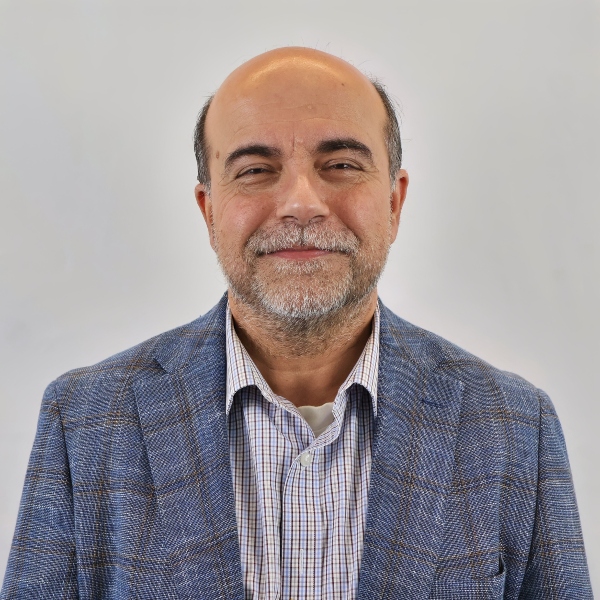
James Sacco, PhD
Associate Professor, Pharmaceutical Sciences
College of Pharmacy & Health Sciences
Phone: 515-271-2848
Email: james.sacco@drake.edu
Biography
PROFESSIONAL AFFILIATIONS
- American Association of Colleges of Pharmacy (AACP)
- Society of Toxicology (SOT)
- American Association for the Advancement of Science (AAAS)
- International Society for the Study of Xenobiotics (ISSX)
- American Society for Pharmacology and Experimental Therapeutics (ASPET)
HONORS & AWARDS
- 2014, Best Poster, 11th Annual Drake University Conference on Undergraduate Research in the Sciences (DUCURS)
- 2011, Best Abstract, Post-Doctoral Category, 6th Great Lakes Drug Metabolism Discussion Group meeting
- 2009, Finalist, ASPET Young Scientist Best Abstract Competition, Drug Metabolism Category, Experimental Biology
- 2006, International Student Award, University of Florida
- 2006, Finalist, Oral Research Presentation, College of Pharmacy Annual Research Showcase Competition, University of Florida
- 2005, Winner, Oral Research Presentation, College of Pharmacy Annual Research Showcase Competition, University of Florida
- 2003, Finalist, Oral Research Presentation, College of Pharmacy Annual Research Showcase Competition, University of Florida
- 2002-2006, President, Graduate Students of the College of Pharmacy, University of Florida
- 2001-2004, Grinter Fellowship, University of Florida
TEACHING PHILOSOPHY
At the core of my educational philosophy is respect for students and commitment to their learning process. My beliefs about teaching and learning are centered on four themes:
A teacher is inspirational. I have received an extraordinary education, and my professional life has been dedicated to providing the same, to the best of my ability, for those who follow. I have always tried to inject my own enthusiasm for science into other students. I have also found that I can generate significant interest from my students if my teaching efforts are focused on showing the students how relevant the topic being learnt is to their career and even their lives.
A teacher is accessible. In the classroom, I use a Socratic method of teaching. In my smaller classes, I engage students in dialogue so that I know where they are on the learning curve. This means I get to know the students fairly well. I have an open-door policy and frequently meet with students to discuss and clarify concepts discussed in class.
A teacher is supportive. I believe in meritocracy. A student who is making good progress should be personally congratulated. I devote additional time and effort to encourage and support students who make a good effort to succeed in their learning endeavors, whether in the classroom or in the laboratory. Of course, students who do not do as well present a greater challenge. I provide personal tuition to such individuals and devote the time not only to clarify the student’s problem with the learning topic but also to attempt to understand why his/her learning is being impaired. I measure the degree of success in my teaching efforts in relation to the change in the student’s progress following my advice and guidance.
A teacher is a great communicator. Classroom time is always limited. Often, the allotted lecture time is not enough to explore a topic in detail. At the same time, one should be careful to include all relevant information. The way to achieve this is through the right visual aids. Slides should be uncluttered, concise and bulleted. Information should be presented in a pictorial, diagrammatic fashion in order to condense information in a nutshell. One should not use a lot of slides, but aim for fewer with ample time for classroom interaction. In order to assess and evaluate my effectiveness in achieving my teaching objectives, I have created and used a Student Assessment of their Learning Gains (SALG) survey to measure students' learning gains in my courses and their progress towards my course's learning objectives.
As a scientist, I believe that it is my responsibility to teach how we know what we know. While the details may eventually be lost, the students learn how to evaluate data. Application of the scientific method will serve them well, no matter their path in life.
EXPERIENCE
- 2008-2012, Assistant Scientist, Laboratory of Dr. Lauren Trepanier, Department of Medical Sciences, University of Wisconsin-Madison, School of Veterinary Medicine, Madison, WI
- 2006-2008, Post-doctoral Research Associate, Laboratory of Dr. Lauren Trepanier Department of Medical Sciences, University of Wisconsin-Madison, School of Veterinary Medicine, Madison, WI
- 2005-2006, Graduate Research Assistant, Laboratory of Dr. David Barber
Center for Human and Environmental Toxicology, University of Florida, Gainesville, FL - 2001-2006, Graduate Research Assistant, Laboratory of Dr. Margaret James
Department of Medicinal Chemistry, College of Pharmacy, University of Florida, Gainesville, FL - 1998-2001, Principal Pharmacist, Eurocosmetic Ltd., Malta
- 1993-2001, Laboratory Officer II, Department of Pharmacy, University of Malta, Malta
- 1993-2001, Practising Pharmacist (part-time) at several community pharmacies, Malta
Education
- 1992 – Bachelor of Pharmacy with Honors, University of Malta, Malta
- 1998 – Master in Philosophy – Pharmaceutical Chemistry, University of Malta, Malta
- 2006 – PhD – Pharmaceutical Sciences- Medicinal Chemistry with a concentration in Toxicology, University of Florida
Areas of Expertise
General: Molecular Toxicology, Pharmacogenetics, Xenobiotic Metabolism
Current projects: The effect of Glutathione-S-Transferase polymorphisms on cancer in dogs
Currently Accepting Student Researchers? Yes
Courses Taught
- PHAR 142 - Pharmacokinetics
- HSCI 150 - 2 Toxicology: The Study of Poisons
Latest Projects and Publications
1. Sacco JC, James MO. 2004. Glucuronidation in the polar bear (Ursus maritimus). Mar Environ Res 58:475-479.
2. Sacco JC, James MO. 2004. Sulfonation of toxic xenobiotics and their metabolites in the polar bear (Ursus maritimus). Drug Metab Rev 36 (suppl 1):344
3. Sacco JC, James MO. 2005. Sulfonation of environmental chemicals and their metabolites in the polar bear (Ursus maritimus). Drug Metab Dispos 33:1341-1348. A synopsis of the above study was also published in the Arctic Bulletin, no.4, 2005, published by the WWF International Arctic Programme.
4. James MO, Sacco JC, Faux LR. 2008. Effects of Food Natural Products on the Biotransformation of PCBs. Env Toxicol Pharmacol. 25: 211-217.
5. Sacco JC, Lehmler H-J, Robertson LW, James MO. 2008. Glucuronidation of polychlorinated biphenylols and UDPGA concentration in channel catfish liver and intestine. Drug Metab Dispos 36: 623-630.
6. Sacco JC, Trepanier LA. 2010. Cytochrome b5 and NADH cytochrome b5 reductase: genotype-phenotype correlations for hydroxylamine reduction. Pharmacogenetics and Genomics 20:26-37.
7. Bhusari S, Abouraya M, Padilla ML, Pinkerton ME, Drescher NJ, Sacco JC,Trepanier LA. 2010. Combined ascorbate and glutathione deficiency leads to decreased cytochrome b5 expression and impaired reduction of sulfamethoxazole hydroxylamine. Arch Toxicol 84:597-607.
8. Abouraya M, Sacco JC Kahl BS, Trepanier LA. 2011. Evaluation of sulphonamide detoxification pathways in patients prior to intermittent trimethoprim-sulphamethoxazole prophylaxis. Br J Clin Pharmacol 71: 566-74.
9. Abouraya M, Sacco JC, Hayes K, Thomas S, Kitchens CS, Trepanier LA. 2011. Dapsone-associated methemogobinemia in a patient with slow NAT2*5B haplotype and impaired cytochrome b5 reductase activity. J Clin Pharmacol 52: 272-278.
10. Rhoads KR, Sacco JC, Drescher NJ, Wong YY, Trepanier LA. 2011. Individual variability in detoxification of carcinogenic arylhydroxylamines in human breast. Tox Sci 121: 245-56. [Highlighted article]
11. Funk-Keenan J, Sacco JC, Wong Y, Rasmussen S, Motsinger-Reif A, Trepanier, L. 2012. Evaluation of polymorphisms in the sulfonamide detoxification genes CYB5A and CYB5R3 in dogs with sulfonamide hypersensitivity. J Vet Intern Med. 2012 Sep-Oct;26(5)
12. Sacco JC, Abouraya, Motsinger-Reif A, Yale S, McCarty C, Trepanier L. 2012. Evaluation of polymorphisms in the sulfonamide detoxification genes NAT2, CYB5A, and CYB5R3 in patients with sulfonamide hypersensitivity. Pharmacogenetics and Genomics. 2012 Oct;22(10):733-40
13. Ginn J, Sacco J, Wong YY, Motsinger-Reif A, Chun R, Trepanier LA. 2012. Positive association between a glutathione-S-transferase polymorphism and lymphoma in dogs. Vet Comp Oncol. 2012 Sep 29. DOI: 10.1111/vco.12000
14. McKenna J, Sacco J, Son T, Trepanier L, Callan M, Harvey J, Arndt J. 2014. Congenital methemoglobinemia in a dog with a promoter deletion and a non-synonymous coding variant in the gene encoding cytochrome b5. Accepted for publication in J Vet Intern Med.