
Doctor of Philosophy in Education, Ph.D.
Bring a transformational perspective to the field of education, pairing a practical orientation with scholarly depth in Drake University’s Doctor of Philosophy (Ph.D.) in Education program.
School of Education | On-Campus
Program Options
A doctorate in education gives you the research acumen and scholarly mindset to engage with the discipline at the highest level. Drake offers both licensure and non-licensure options.
Ph.D. in Education
Develop sophisticated research skills as you think about how students acquire new information and teachers assess their progress. You’ll integrate your experience and studies through original research in a dissertation. The program is 54 credits.
Principal Licensure
This program adds courses for principal licensure, focusing on organizational behavior, instruction supervision, community relations, the law, and other practical knowledge you’ll need for school leadership and management. The program is 63 credits.
Superintendent Licensure
Prepare for district-wide leadership by studying complex organizational management, systems thinking, human resources management, ethical leadership, and other areas central to the superintendent role. The program is 61 credits.
Careers & Skills
Upon completing the Ph.D. program, you’ll possess finely tuned skills in research and analysis that prepare you for data backed evaluation and decision-making in both academic and non-academic settings. Paired with your expertise in learning dynamics, you’ll thrive in roles where you’ll design and assess the experiences, materials, systems, and policies that guide classrooms to district-level programs.
Job Titles
- Curriculum developer
- Educational consultant
- Educational policy analyst
- Educational researcher
- Instructional design leader
- University professor
Skills
- Quantitative and qualitative research
- Curriculum development
- Data analysis
- Professional communication
- Program evaluation
Salary & Growth Outlook
Median salary for K-12 principals in 2024. (U.S. Bureau of Labor Statistics)
Meet the Faculty
Your professors pair classroom experience with active research interests to give you the latest insights shaped by practical, real-world knowledge.
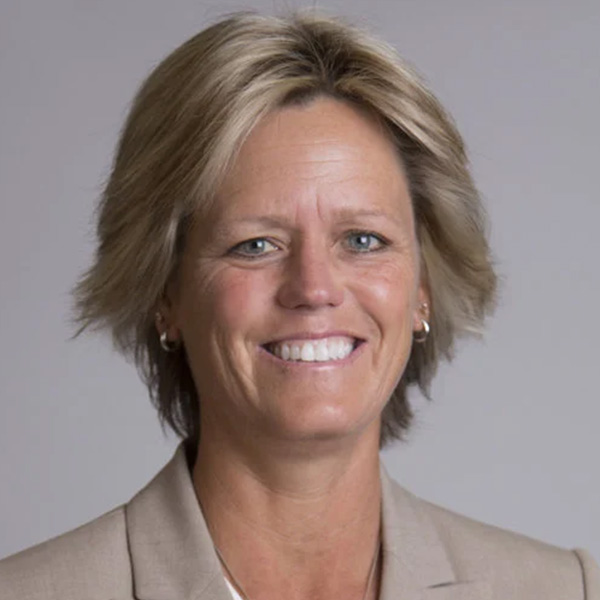
Robyn Cooper, Ph.D.
Department Chair, Leadership & Counseling; Professor and Director of Doctoral Program



Tonia Land, Ph.D.
Department Chair, Teaching and Learning; Professor, Mathematics and Technology Education

Outside the Classroom
Your ideas could transform how teachers reach students and how schools and districts develop curricula. That influence begins with the research you conduct at Drake.

AI and Data Storytelling
Get up to speed with the latest technological trends. In a required course on learning analytics, you’ll discover how to leverage AI and data representation to drive strategic decision-making.
Research
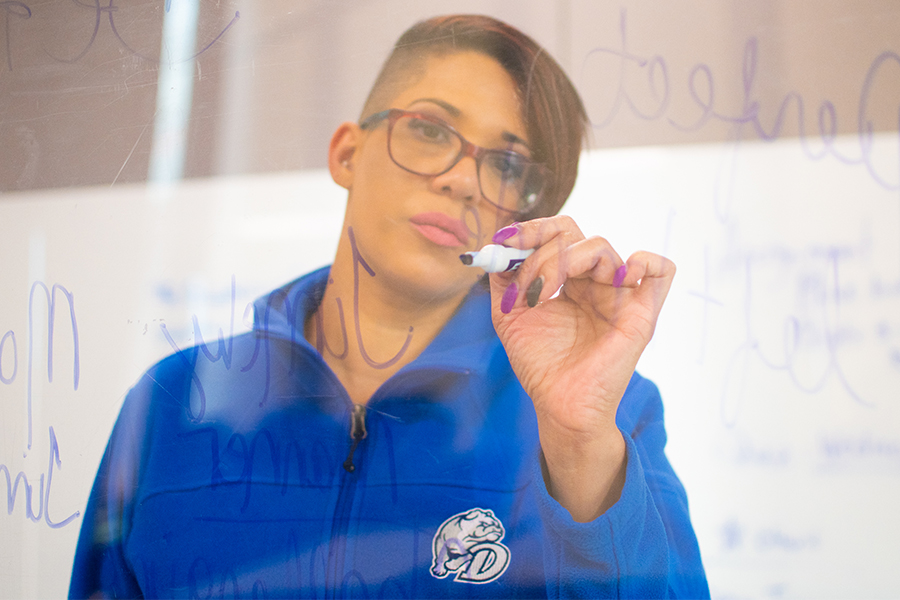
You’ll complete advanced training in quantitative and qualitative research methods and have opportunities to collaborate with faculty to generate findings that can be shared at conferences or published in academic journals.

Apprenticeship Experience and Mentorship
In the final year of the program, you’ll work closely with a faculty mentor in an apprenticeship, gaining vital experience in career-aligned activities ranging from curriculum development to grant writing.

Cohorts and Professional Development
The program uses a cohort model. You’ll progress through your courses alongside the same group of students, building a network of current and future leaders.

Dissertation
For an in-depth, scholarly research project, you’ll investigate a topic or problem that interests you, surfacing novel insights that influence classroom instruction and policy formation.

Licensure in Iowa
How will you uplift tomorrow’s learners? As a Ph.D. candidate, you can pursue coursework toward a principal or superintendent license in Iowa and qualify as you finish your dissertation.
More Information
In general, students may receive credit for academic courses taken through doctorate programs at accredited institutions.
- Graduate credits completed up to five years prior to admission will be considered for full credit transfer, whereas graduate credits completed five to 10 years prior to admission will be considered for half-credit transfer.
- Courses accepted for transfer credit must parallel courses offered at Drake University or otherwise be appropriate for doctorate-level credit.
- Graduate courses considered for transfer must be beyond the required 30 master’s-level credits required for admission into a Drake doctoral program.
- The maximum number of credits that can be transferred into a Drake doctorate program can be no more than a third of the total credit for the full degree program.
- Transfer credit requests must be at the time of application into the program. Syllabi should be provided at the time of request. Typically, research courses are not accepted for transfer but will be considered by the committee for exceptions.
- Transcripts must come directly from the institution; we will not accept any transcripts from students.
- Requests are formally evaluated by a subcommittee of the doctoral faculty. Applicants will be notified of the accepted transfer credits in writing.
- You must have earned a grade of "B" or better in the transfer course.
Certain factors will affect your ability to transfer prior credits, including:
- Financial aid implications.
- Transfer credits may not change your graduation date.
- Gaps in your prior coursework.
- The cohort model may require you to take courses that duplicate credits you’ve earned elsewhere.
Contact the Coordinator of Graduate Admission to request a review of your transfer credits.
Learn more about Drake’s Ed.D. and Ph.D. programs during a live online session designed for those considering a School of Education graduate program who haven’t yet applied. Drake's School of Education faculty will share additional details about coursework and research, and you’ll have a chance to ask questions during an open Q&A.
Take the Next Step
Drake’s Ph.D. in Education program is where you transition from an expert into a pioneering scholar.