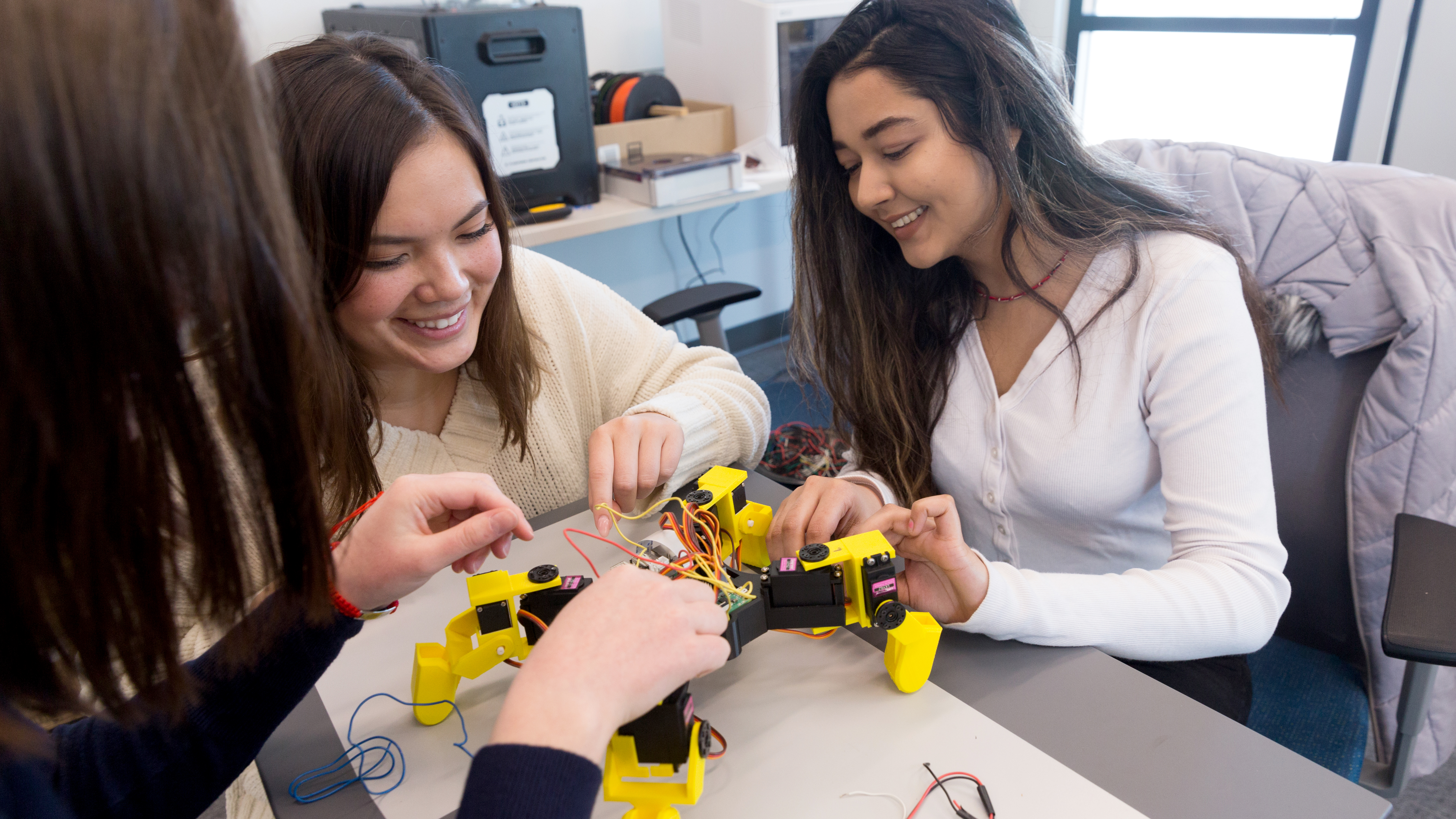
Pre-Engineering Program
Begin with intensive studies in STEM (and STEM-related disciplines) and the liberal arts before transitioning to a professional engineering program at Washington University’s McKelvey School of Engineering in St. Louis.
College of Arts & Sciences | On-Campus
Program Options
Explore all the pathways to an engineering degree that begin at Drake.
3+3 Dual-Degree Engineering Pathway With Washington University
Earn three degrees in this official partnership. Start working on your first degree at Drake, and then after three to four years, transfer to Washington University’s renowned McKelvey School of Engineering, where you’ll pursue a second degree in biomedical, chemical, computer, electrical, mechanical, or systems science engineering. After completing bachelor’s degree requirements, you can enroll directly in a master’s program at Washington University.
Careers & Skills
Engineers design biomedical devices, improve battery technology, create next-generation communication systems, and play a role in almost every aspect of modern life. The STEM programs at Drake can prepare you for a career in one of those industries—while also imparting the kind of personal and professional skills that employers look for.
Opportunities
- Pollution control
- Infrastructure design
- Software development
- Factory automation
- Satellite design
- Prosthetic development
Skills
- Communication, problem-solving, and interpersonal skills
- A broad background in the humanities and sciences
- Technical engineering knowledge
- Research skills
Salary & Growth Outlook
Median salary for bioengineers and biomedical engineers in 2024. (U.S. Bureau of Labor Statistics)
Meet the Faculty
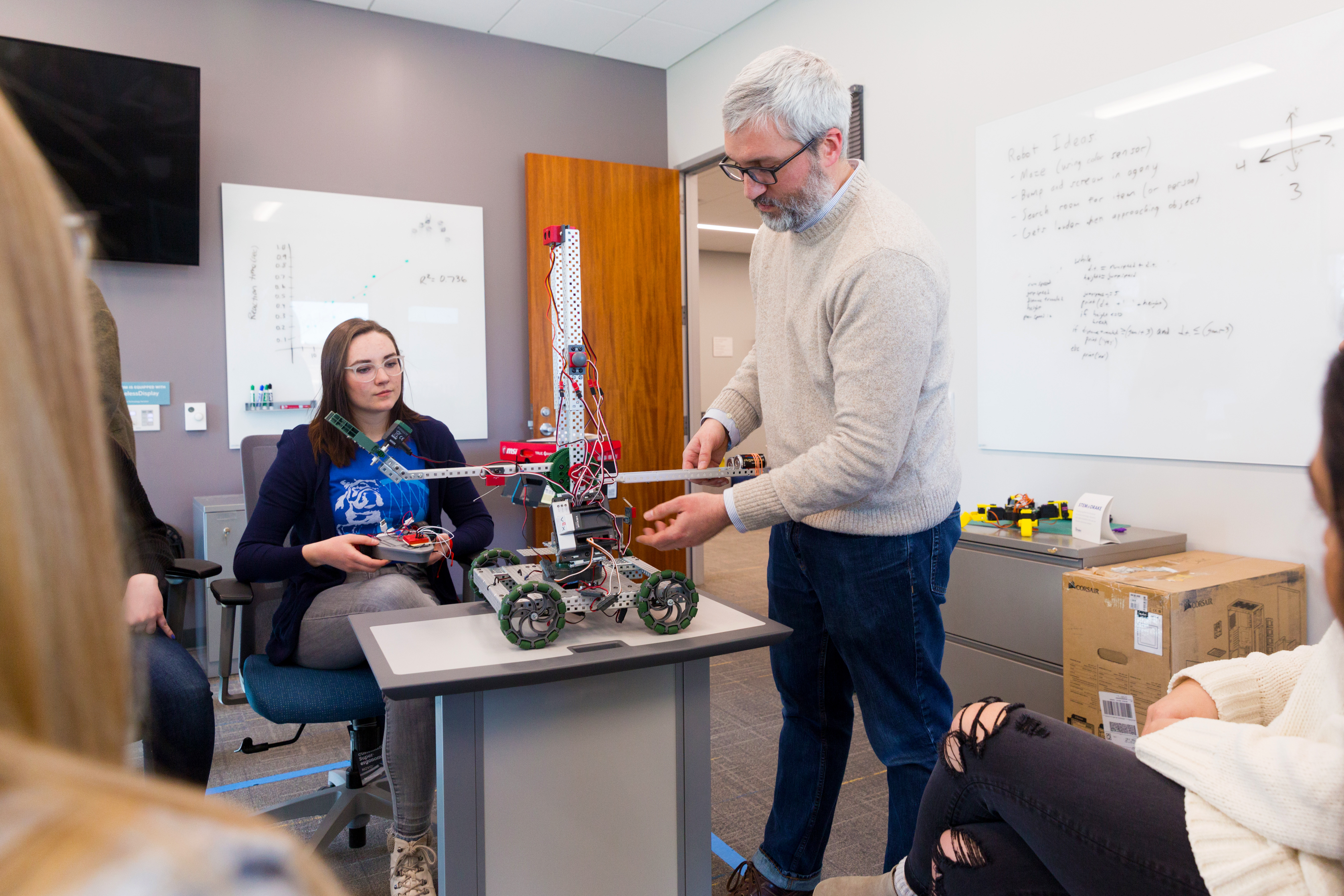
Our faculty play critical roles as advisors and mentors, helping you put together a solid academic plan for dual-degree studies while also providing the hands-on research experience that will lead to future success.


Ryan Sturms
Assistant Professor, Chemistry; Department Co-chair, Chemistry and Physics


Outside the Classroom
Engineers do. And so will you, both at Drake and Washington University.

Research
Build your research skills at Drake, where you can participate in faculty-led projects—and then immerse yourself in the R1 culture of WashU, which attracted $57 million in awards in 2023.

Internships
The best way to see how the world works is to go to work in the world. You’ll have access to career services offices at both Drake and WashU that can steer you to opportunities that mesh with your career goals.

Study Abroad
You can fulfill the Pre-Engineering program’s rigorous requirements while also exploring abroad through a J-Term course—faculty-led, three-week programs held over winter break that often travel to another country.
Take the Next Step
Starting your engineering degree at Drake offers the best of both worlds: the personal attention you’ll get from a liberal arts institution plus the technical rigor of an R1 research program.
Contact us
Jill Allen, Ph.D.
Faculty Liaison Officer
jill.allen@drake.edu