Chemistry Major
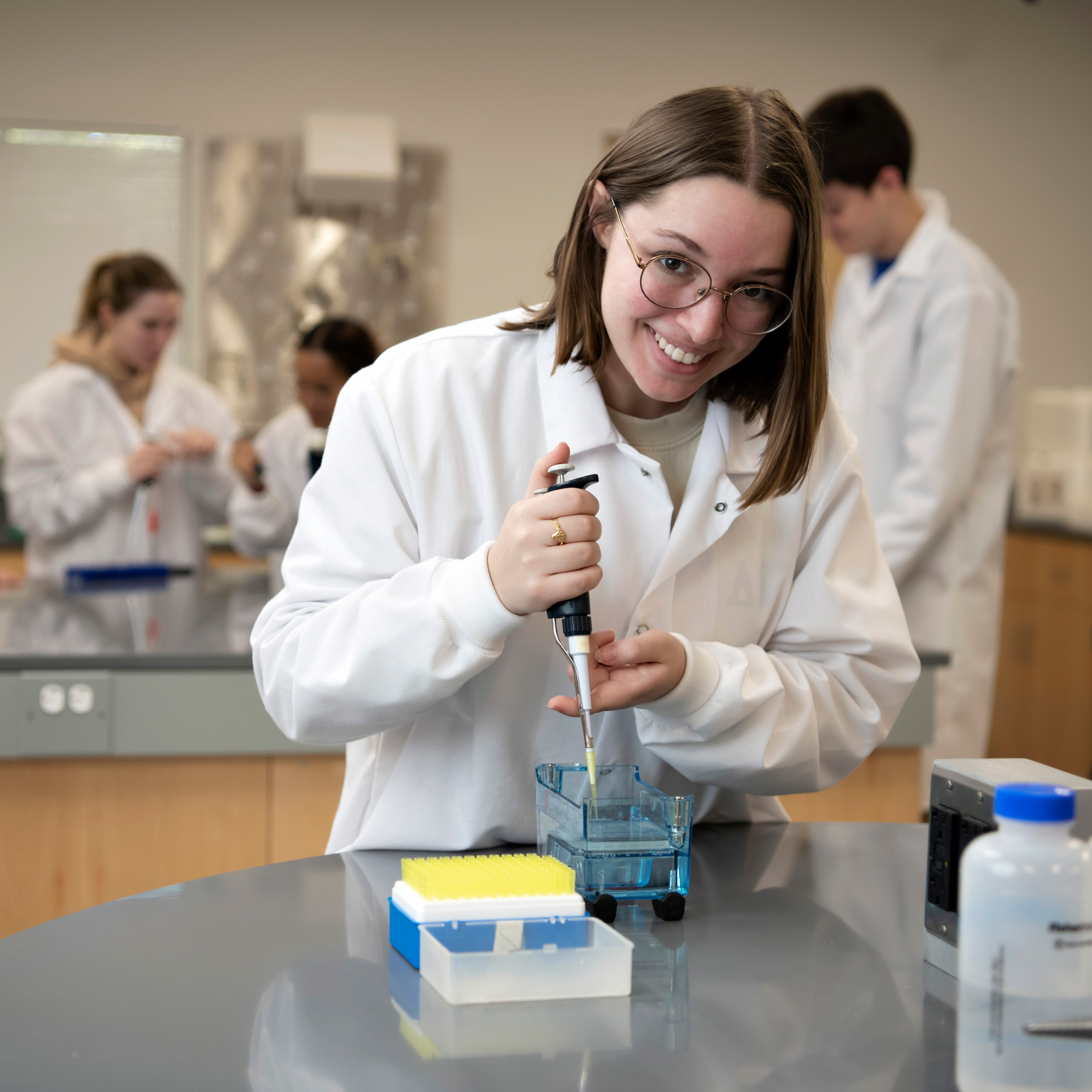
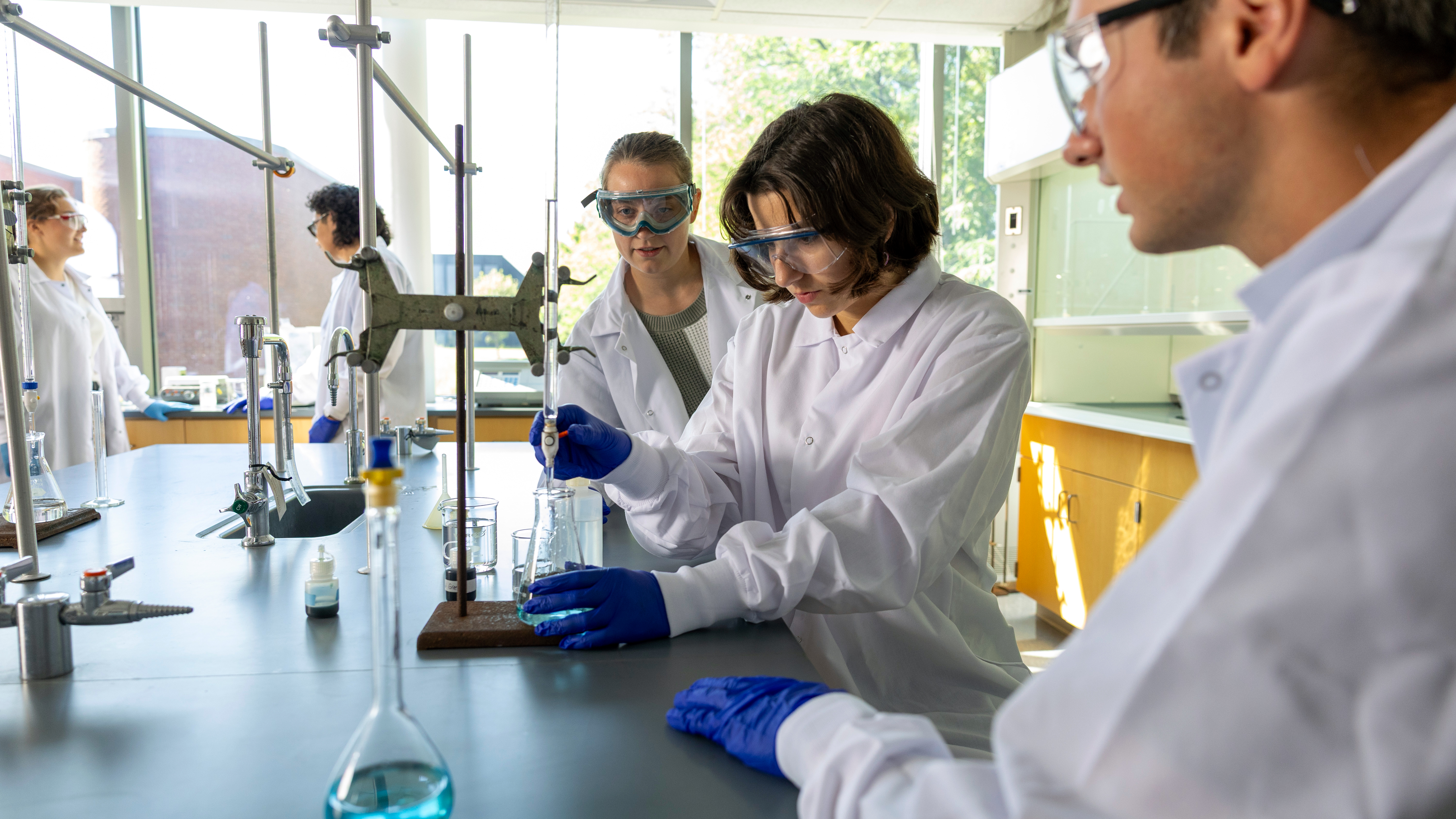
Learn by doing in Drake’s Chemistry program, where you’ll engage with faculty and participate in research from the start.
College of Arts & Sciences | On-Campus
Program Options
Drake offers two Chemistry degrees: a Bachelor of Science and a Bachelor of Arts. Both provide a solid foundation of scientific knowledge and experimental skills while emphasizing current developments in the field and experience with modern instruments and techniques.
B.A. in Chemistry
The Bachelor of Arts degree prepares students for careers in medicine, dentistry, veterinary medicine, and fields outside chemistry.
B.S. in Chemistry
The Bachelor of Science degree prepares students for graduate study in chemistry or a career in chemistry or an allied area such as environmental science, chemical engineering, or biochemistry.
Chemistry Minor
Students in any major can declare a minor in Chemistry. The minor requires 31 credits, 24 in chemistry and seven in calculus and physics.
Pre-Medical Studies
Start with an understanding of chemical and molecular processes to prepare for medical school and a career in patient care or medical research. Toward this goal, you’ll meet with faculty mentors and advisors to select courses and experiences that strengthen your application.
3+2 and 4+2 Chemistry/Engineering Dual-Degree Programs
Drake’s affiliation with Washington University in St. Louis allows undergraduate Chemistry majors to additionally pursue an engineering degree. In these combined programs, you’ll complete three or four years at Drake before entering Washington University.
Arts and Sciences and Law 3+3 Program
Drake’s Chemistry program establishes a rigorous, research-intensive foundation for law school. If approved for this track, you’ll start classes at Drake Law School following your junior year, earning both a bachelor’s and J.D. in six years.
STEM Undergraduate Research Scholar Concentration
Pursue meaningful undergraduate research and work closely with faculty mentors through the STEM Undergraduate Research Scholar Concentration. This transcript-recognized program combines hands-on research, skill-building coursework, and a capstone presentation to help you develop expertise in research, analysis, and communication.
Careers & Skills
Committed to the environment? You can use a Chemistry degree to monitor air and water quality. Driven to cure disease? A Chemistry degree allows you to discover new compounds or use computers to understand how they interact with other drugs. Or you can pursue dozens of other possibilities with your knowledge, whether in related fields such as chemical manufacturing, biochemistry, and molecular biology, or through additional training in law, medicine, allied health, or education.
And no matter which path you take, Drake’s extensive, globe-spanning network of alumni and industry professionals is eager to bring you on board.
Employers
- 3M
- Department of Criminal Investigation (DCI) labs
- Eli Lilly
- Kemin Industries
- Corteva Agriscience
Skills
- Scientific knowledge and experimental skills.
- Critical thinking, practical expertise, and independence through research.
- How to use research-grade instrumentation.
- An expansive intellectual foundation.
- Teamwork and collaboration.
Salary & Growth Outlook
Median salary for chemists and materials scientists in 2024. (U.S. Bureau of Labor Statistics)
Meet the Faculty
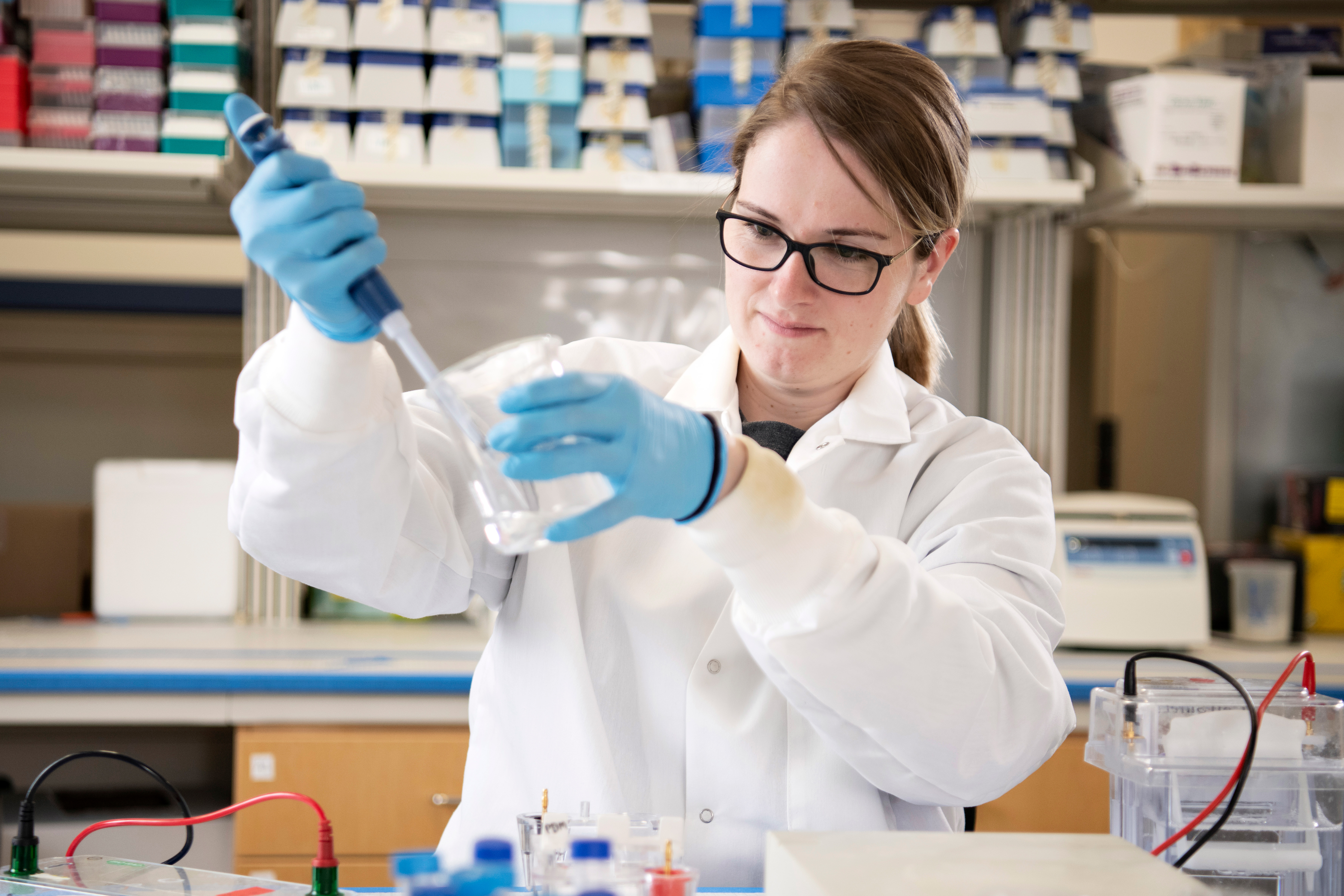
The six full-time faculty members in Drake’s Department of Chemistry serve as mentors, advisors, and even collaborators, as they welcome student participation in their research.






Ryan Sturms
Assistant Professor, Chemistry; Department Co-chair, Chemistry and Physics
Outside the Classroom
Hands-on experience is the best way to learn scientific concepts. Guiding your exploration, our faculty direct you to real-world opportunities, introduce you to their research, and encourage you to discover your own interests.
Faculty Research
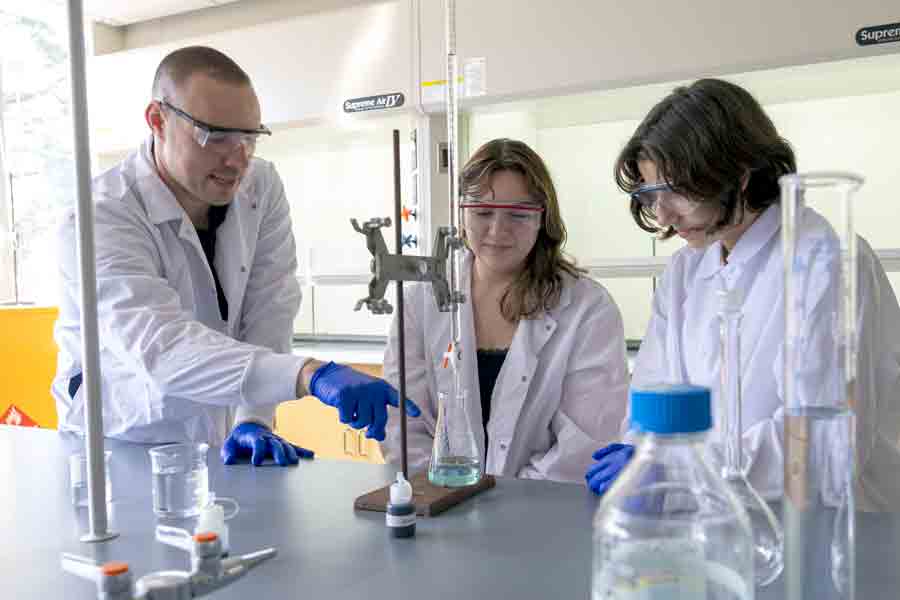
Our faculty orchestrate studies on the binding of oxygen to heme proteins; ionic liquid synthesis; microwave-assisted organic reactions; analytical methods for art authentication and restoration; the molecular origins of color; and how best to teach and learn chemistry. You’re invited to join and can even earn course credit or a stipend for participation.
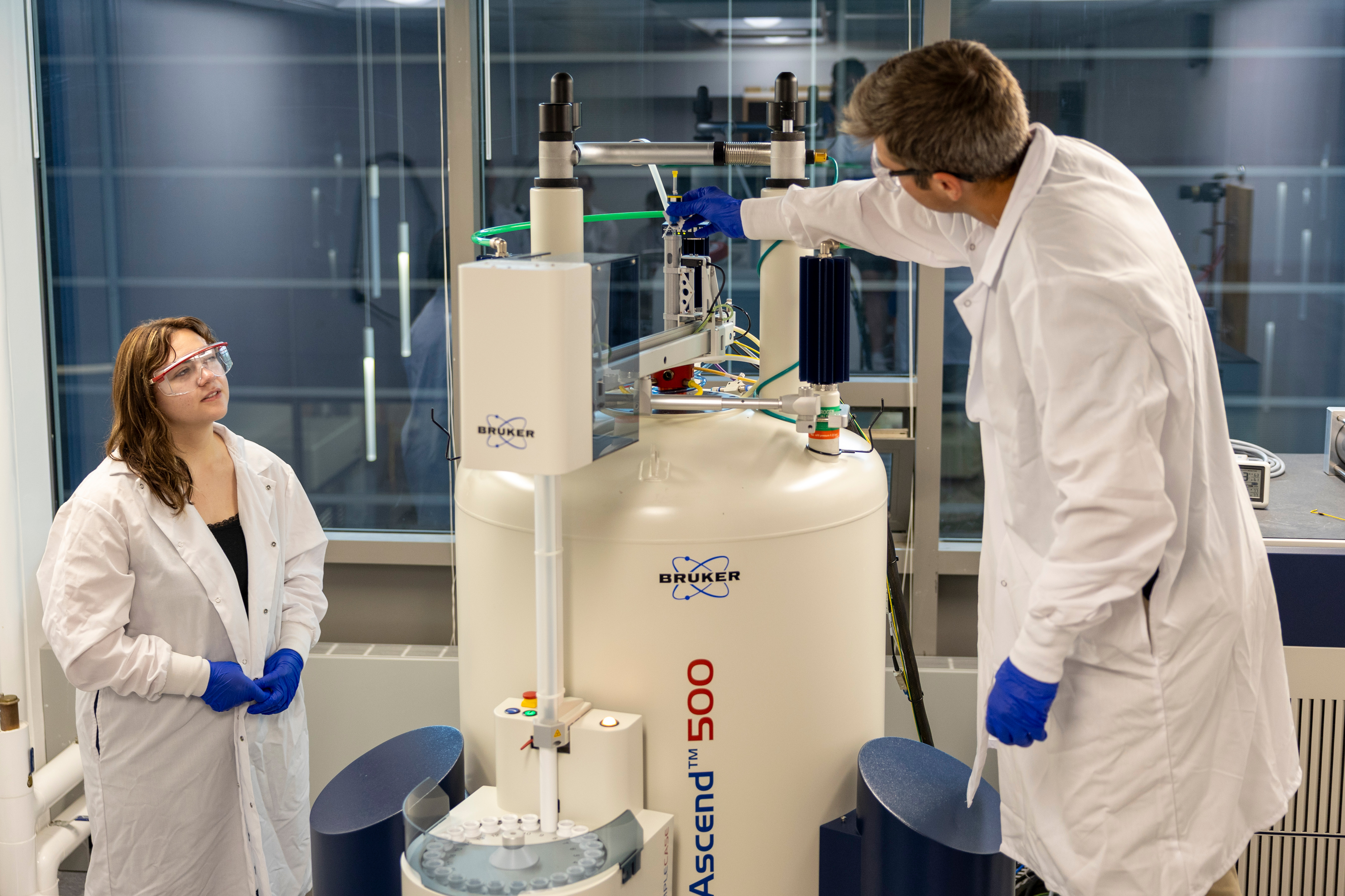
Internships
See classroom lessons come to life and build professional skills through internships with area organizations such as Kemin, Corteva Agriscience, The Nature Conservancy, and Des Moines Water Works.
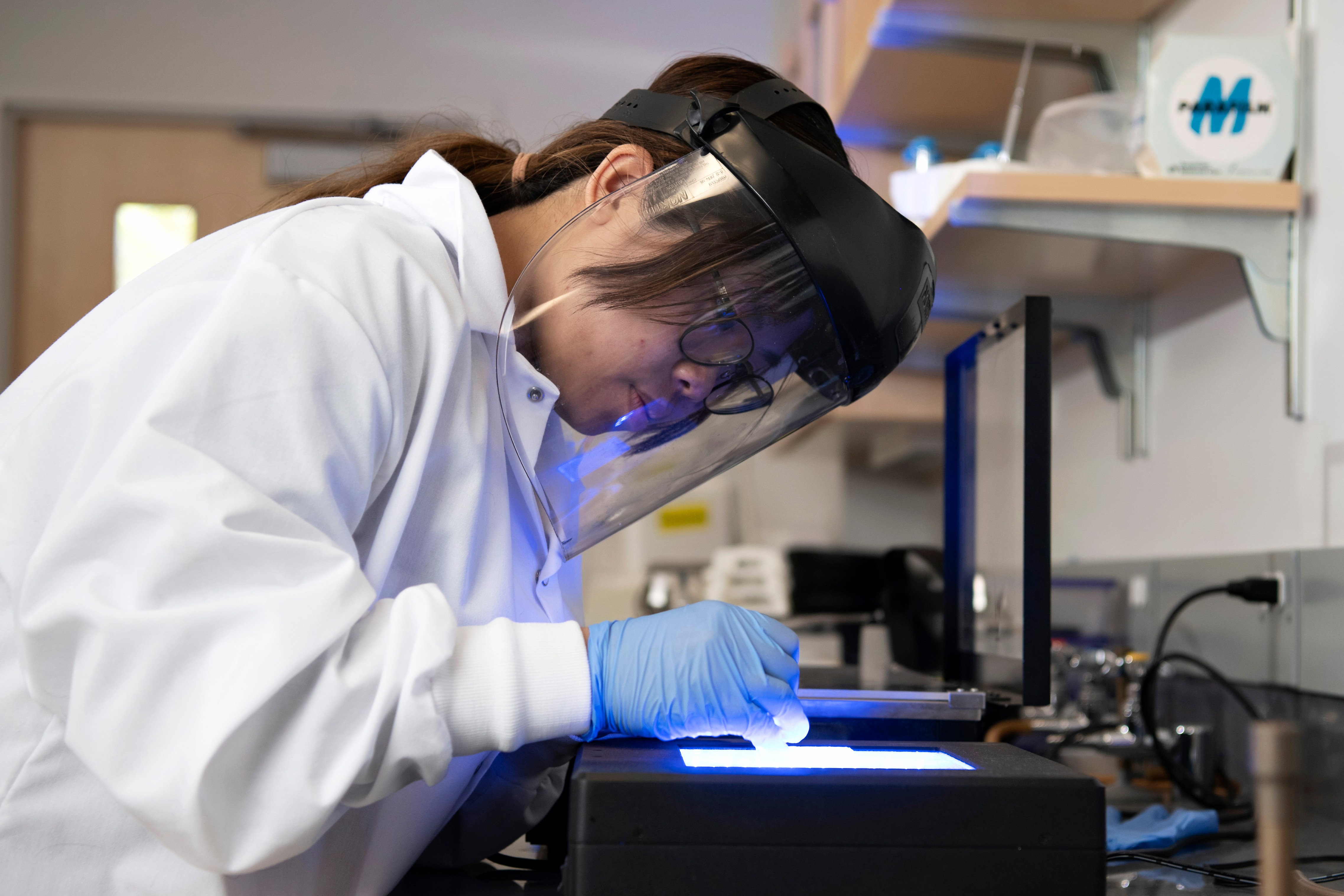
Summer Research Opportunities
Spend your summer working in a lab on Drake’s campus or at a large research institution as part of the National Science Foundation-funded REU program. We’ll help you identify opportunities that match your interests and goals.
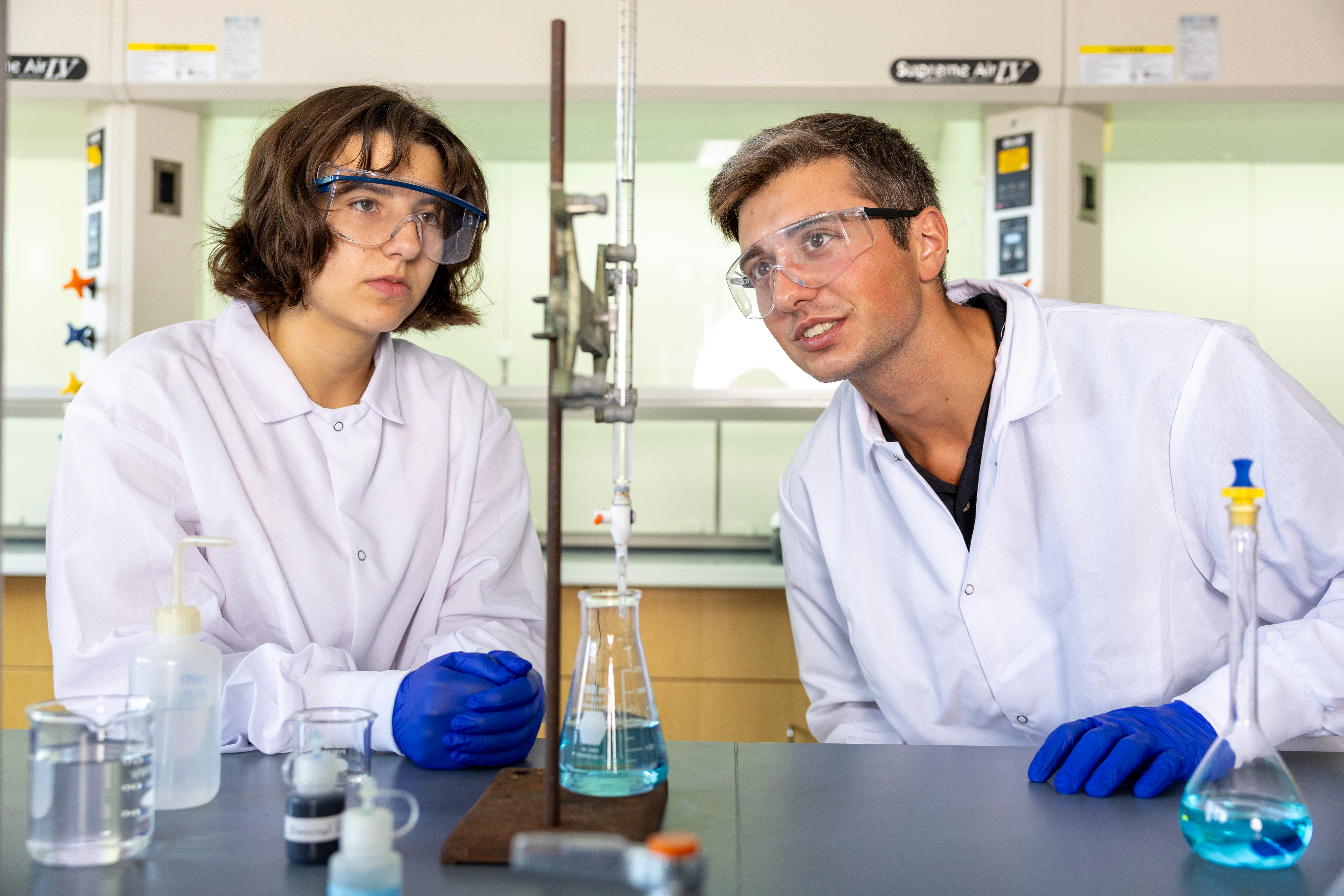
Colloquium and Mentorship
We’re focused on your next steps. Faculty mentors will steer you toward research that fits your interests, while our Chemistry Colloquium series puts a spotlight on chemistry-related careers in a variety of fields.

Student Awards
Every year, we recognize some of our best Chemistry students with awards and scholarships. Drake students also routinely receive recognition from the prestigious Barry M. Goldwater Scholarship and Excellence in Education Program.
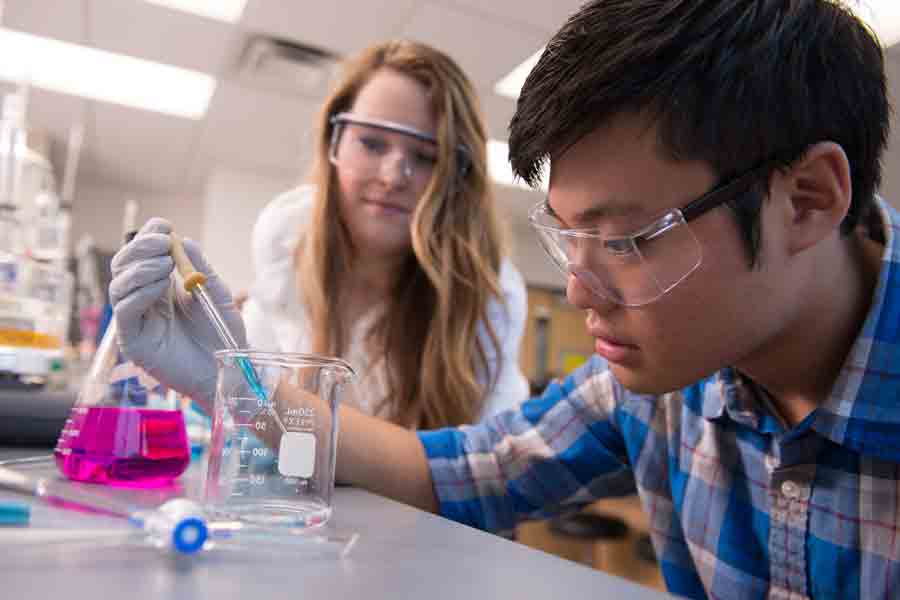
Student Organizations
Meet other Chemistry majors, participate in community service initiatives, and build your professional network by joining Drake’s Chemistry Club or becoming a student affiliate member of the American Chemical Society or the American Society for Biochemistry and Molecular Biology.
Take the Next Step
Craft, catalyze, and grow your career with a bachelor’s degree in Chemistry from Drake.