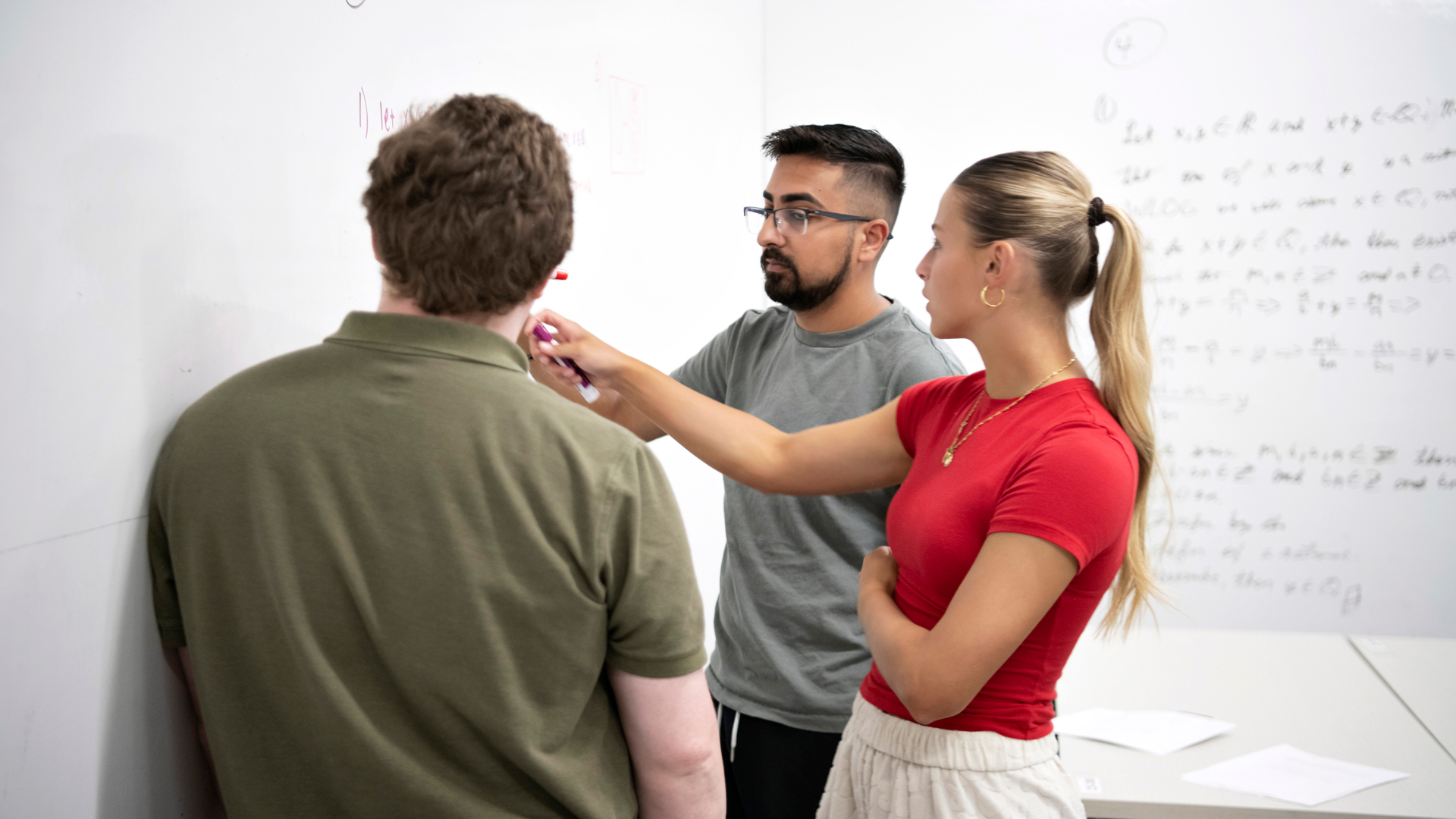
Mathematics Major
Earn a bachelor’s in Mathematics in a department small enough to build close bonds with professors but large enough to conduct work of real consequence.
College of Arts & Sciences | On-Campus
Program Options
Choose from two bachelor’s degree paths that give you access to deeply committed faculty: over the past decade, five department members have received Arts and Sciences Outstanding Teacher of the Year awards.
B.A. in Mathematics
If you’re less interested in a scientific emphasis, consider pursuing a Bachelor of Arts in Mathematics. In this program, you will complete eight core courses and a sequence of electives that allow you to incorporate diverse disciplines into your studies.
B.S. in Mathematics
Students in the Bachelor of Science in Mathematics program take the same math courses as those earning a B.A. but must complete additional science requirements.
Mathematics Minor
Fields such as technology, business, and many social sciences are increasingly reliant on quantitative analysis. A math minor can help your résumé stand out for these roles. This 24-credit program includes classes in calculus, computer science, and other topics exploring math’s theoretical foundations and applications.
STEM Undergraduate Research Scholar Concentration
Pursue meaningful undergraduate research and work closely with faculty mentors through the STEM Undergraduate Research Scholar Concentration. This transcript-recognized program combines hands-on research, skill-building coursework, and a capstone presentation to help you develop expertise in research, analysis, and communication.
Double Major
A Mathematics degree is a valuable companion to many other arts and science majors. Math helps music majors better understand musical theory, education majors become better teachers, and physics majors learn the fundamental principles behind their work. Other recommended pairings include computer science, data analytics, actuarial science, quantitative economics, artificial intelligence, and chemistry.
Careers & Skills
Quantitative and data analysis skills are in demand—and it shows, based on the range of places where Drake math majors find jobs. In fact, the U.S. Bureau of Labor Statistics predicts that the number of jobs available to mathematicians and statisticians will increase 11% over the next decade.
Mathematics majors work at technology companies, financial institutions, insurers, government agencies, and anywhere else in need of high-level quantitative analysis.
Employers
- Ernst & Young
- Greenpeace
- National Security Agency
- MidAmerican Energy
- NASA
Skills
- Think critically as you formulate and solve problems.
- Perform complex mathematical and computational tasks.
- Work independently and understand unfamiliar mathematical concepts.
- Understand the historical contexts behind your work.
- Read and understand technical material.
- Use technology to analyze and solve problems.

Salary & Growth Outlook
Median salary for mathematicians and statisticians in 2024. (U.S. Bureau of Labor Statistics)
Meet the Faculty
Rise to the challenge of advanced math, analysis, and modeling with the support and guidance of award-winning teachers who equip you with the tools to apply theory in real-world contexts.




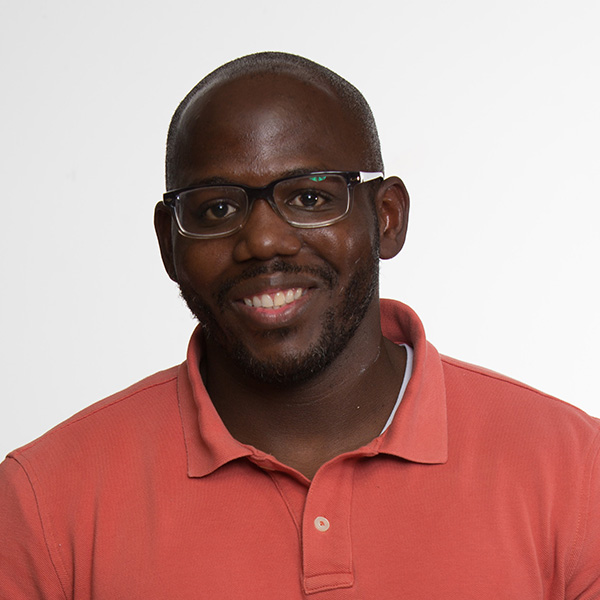
Terrance Pendleton
Associate Professor, Mathematics



Alfred Limbere
Visiting Assistant Professor, Mathematics
Outside the Classroom
As a Mathematics major, you’ll be part of a department with over 250 students. That means you’ll meet a lot of people whose love of math is as deep as yours. You can cultivate it together through our Problem Solving Club and research groups—or focus on your own independent study or research.

Independent Study
At Drake, you’ll get to know your professors well enough that they can help you build customized independent study projects to focus on your unique interests.

Research
You’ll have the chance to start researching in your first year, as a group of students did by building an Agent-Based Model to assess policy impacts on electric vehicle use or working on graph theory through a Cops and Robbers game. Others have studied how programming can help students learn mathematics. Or pursue your own projects with faculty serving as guides.
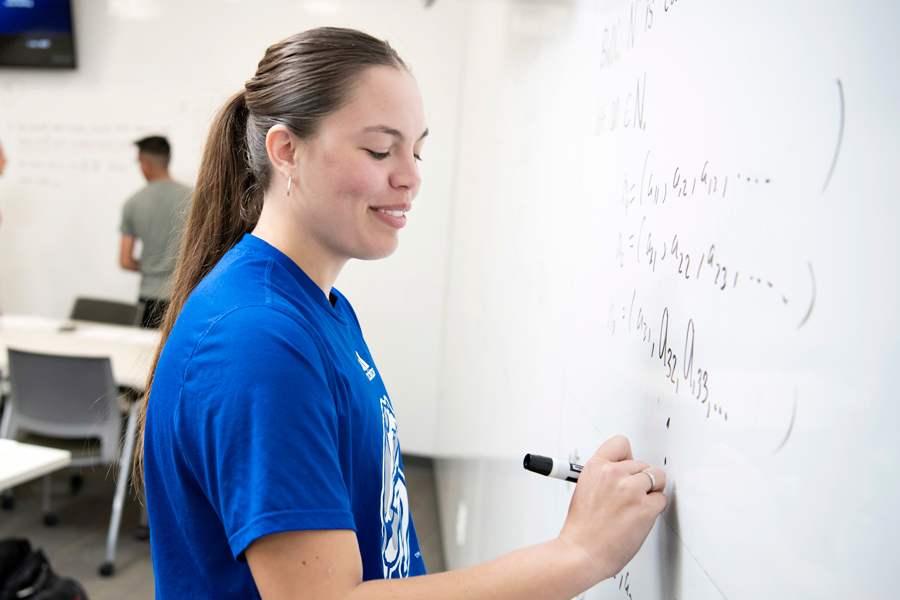
The Basil E. Gillam First Year Award
Sharpen your pencils: the Kappa Mu Epsilon Math Honors Society awards prizes to students who excel at the Basil E. Gillam First Year Mathematics Contest, named in honor of a long-time department chair.

Student Clubs
Solve problems, get to know some of your fellow math and computer science majors, and make professional connections in groups like Women in STEM, the Kappa Mu Epsilon Math Honors Society, the Problem Solving Club, and the Coding Club.
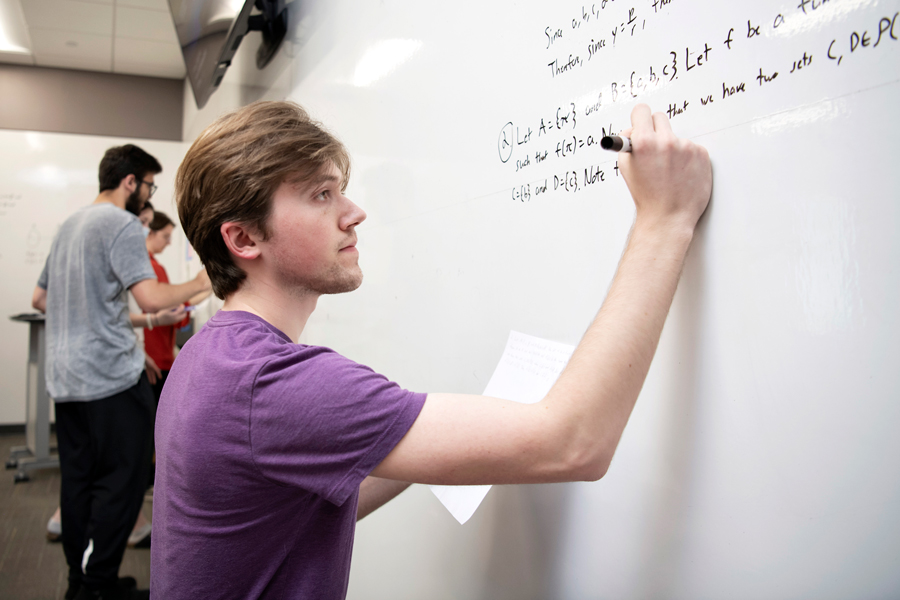
Competitions
Test yourself against the best. Our students regularly compete in the Iowa Collegiate Math Competition and the Putnam, the top undergraduate math competition in the U.S. and Canada. Drake’s math students won the Iowa Collegiate Competition in 2025 and will host the event in 2026.

Scholarships
Students who demonstrate financial need and identify as part of an underrepresented group in STEM may earn our CODE (Community of Digital Excellence) Scholarship, which carries a $5,000 annual value.
Take the Next Step
Mathematics is quantitative, but it’s the quality of instruction at Drake that sets our bachelor’s programs apart. Contact us to learn how you’ll fit in here.