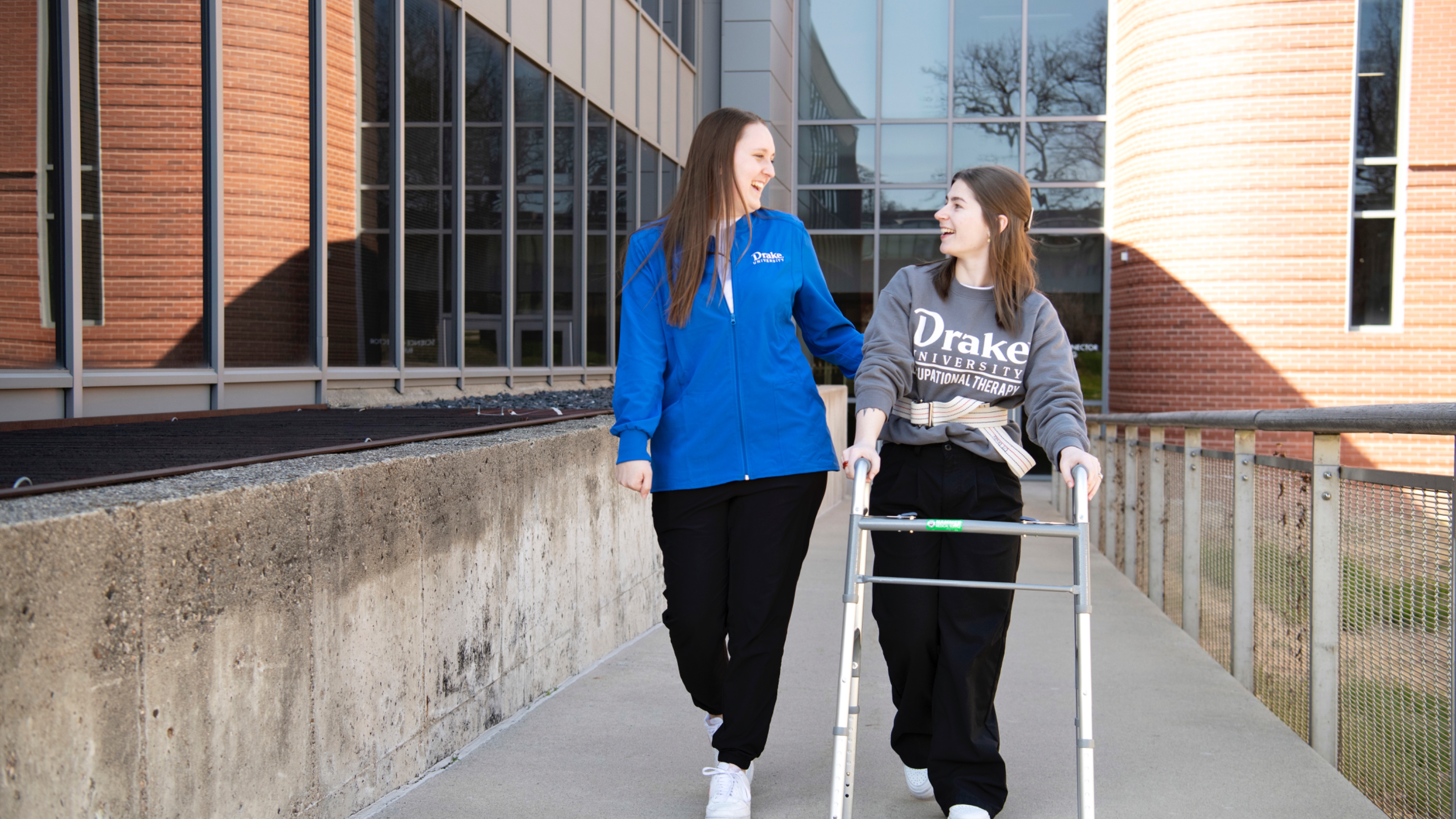
Pre-Occupational Therapy Program
The path to helping patients lead more independent, engaged lives begins with Drake University’s Pre-Occupational Therapy program.
College of Pharmacy & Health Sciences | On-Campus
Program Options
Drake offers several undergraduate routes to the OTD program. Explore your options to see which best matches where you are and how you’d like to get there.
B.S. in Health Sciences, Pre-Occupational Therapy
This track offers significant flexibility through a number of electives while providing the necessary courses in science, math, and psychology. It also includes an in-depth health sciences internship for hands-on experience in a clinical setting. Available as a three- or four-year program.
Pre-Occupational Therapy—Public Health
Through this track, you’ll combine the essential coursework for entry into the occupational therapy program with a substantial introduction to the central areas of public health, allowing you to approach patient care from a holistic perspective.
Pre-Occupational Therapy—Clinical and Medical Sciences
Immerse yourself in biology, chemistry, economics, anatomy, physiology, and various aspects of patient care delivery to embark on a number of pre-professional directions.
Occupational Therapy, OTD
Designed for those with at least three years of undergraduate coursework, including specified prerequisites, this three-year, full-time program equips you to assess clients, develop treatment plans, and monitor their progress through rigorous coursework and clinical assignments.
Careers & Skills
The Pre-Occupational Therapy program is built to prepare you to gain admission and excel in Drake’s OTD program. You’ll check off all prerequisites, getting exposure to essential science and math topics plus strengthening your communication, research, and analysis skills.
Occupational therapists are in high demand, with jobs projected to grow 11% in the years ahead.
Opportunities
- Home healthcare providers
- Hospitals
- Mental health clinics
- Outpatient clinics
- Schools
- Skilled nursing facilities
Skills
- Clinical reasoning and care
- Communication
- Foundational knowledge in biomedical sciences
- Leadership
- Professionalism and ethical practice
- Research
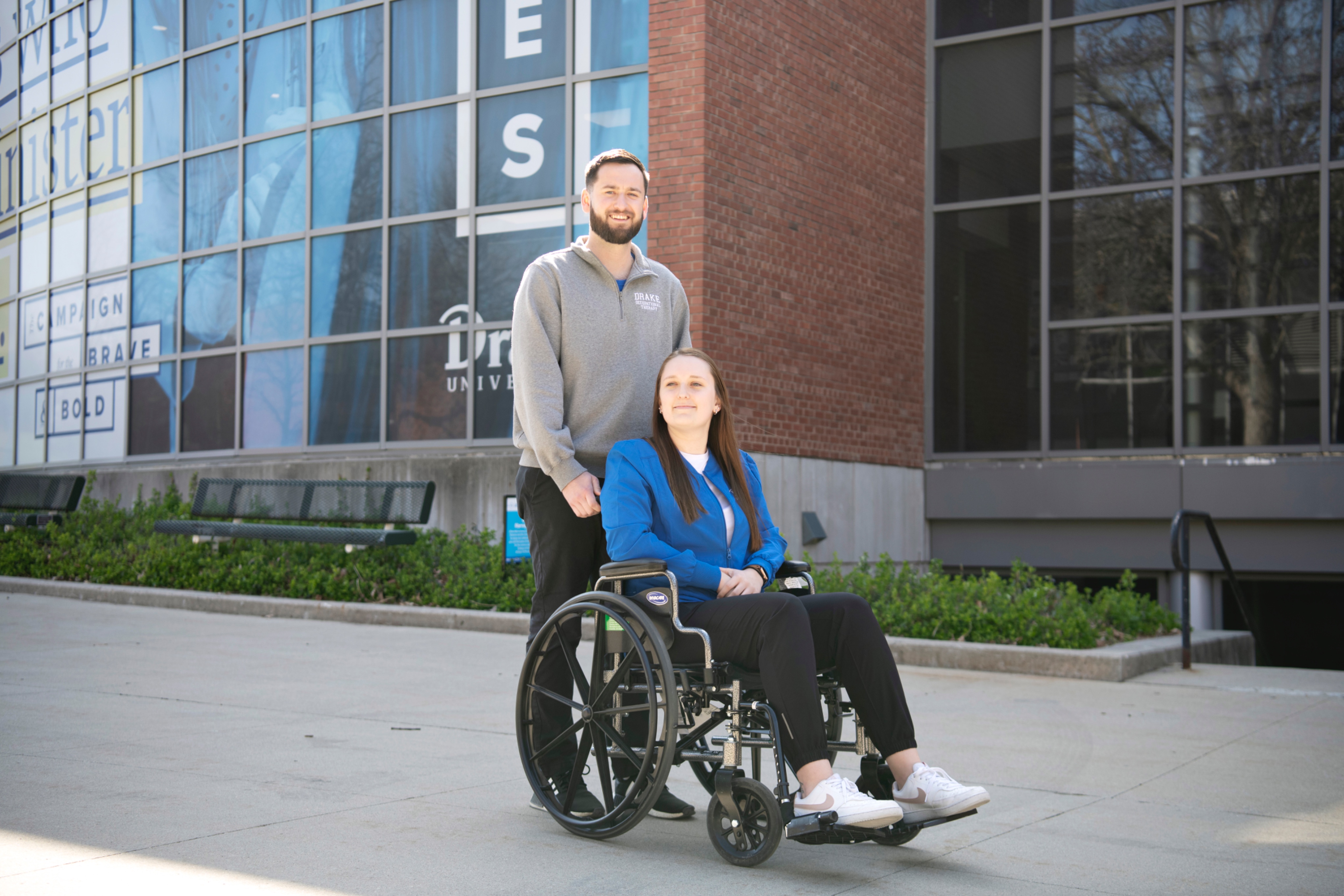
Salary & Growth Outlook
Median salary for occupational therapists in 2024. (U.S. Bureau of Labor Statistics) Note: Professional degree needed. This figure is not reflective of entry-level OT salaries.
Meet the Faculty
Tap into professional expertise and personalized support. You’ll learn and grow as you work with professors dedicated to the OT field and your success.


Rachel Allen-McHugh, OTD, MOT, OTR/L, RYT-200
Department Chair and Program Chair, Occupational Therapy; Associate Professor, Occupational Therapy

Outside the Classroom
Alongside intensive coursework that ensures you have the knowledge needed for the Doctor of Occupational Therapy program, parallel experiences boost your professional readiness and strengthen your confidence.
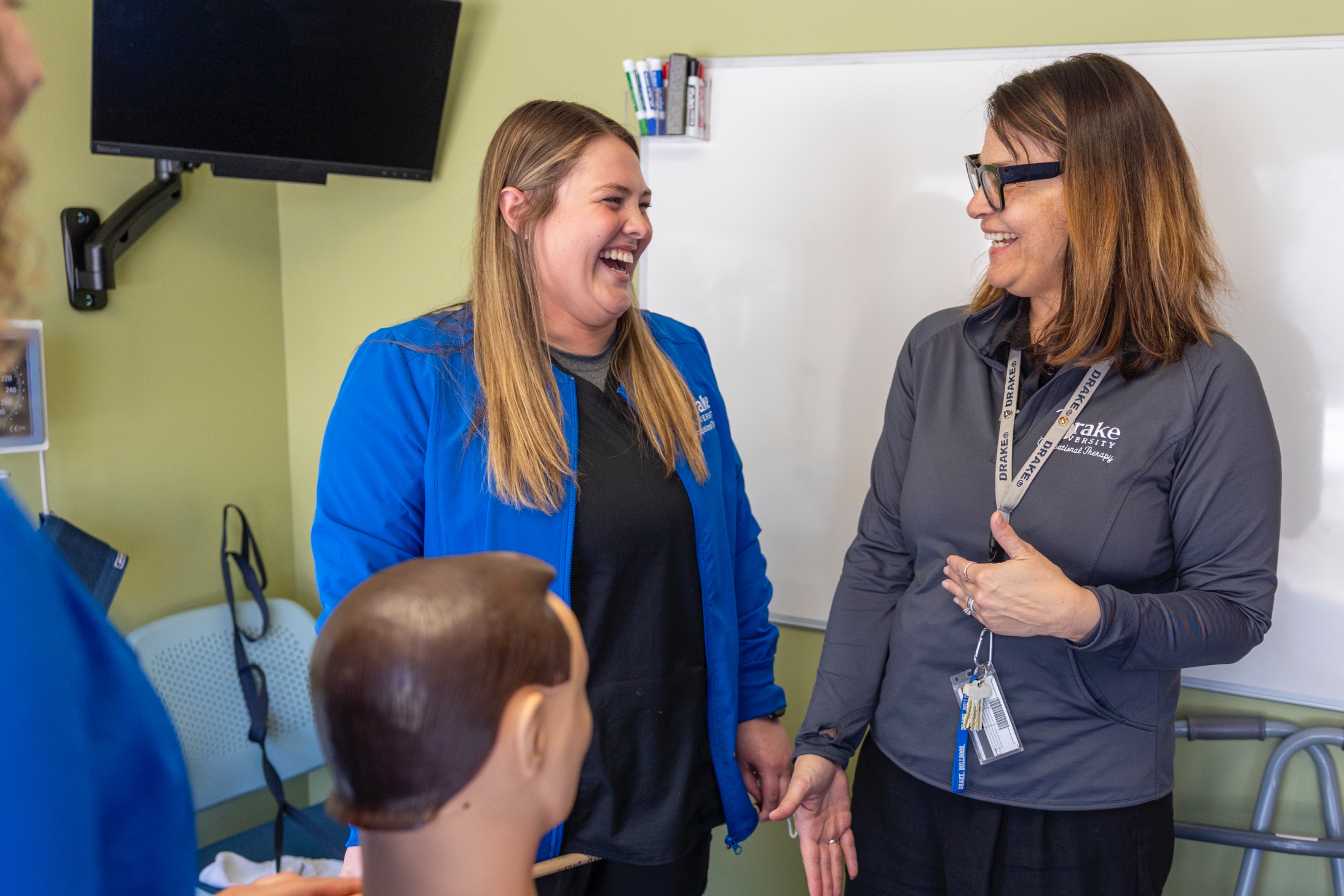
Mentorship
From your first year, you’ll be paired with an Occupational Therapy faculty mentor and an advisor from the Office of Student Affairs and Enrollment Management, giving you access to support and guidance for building your course load and completing your application.
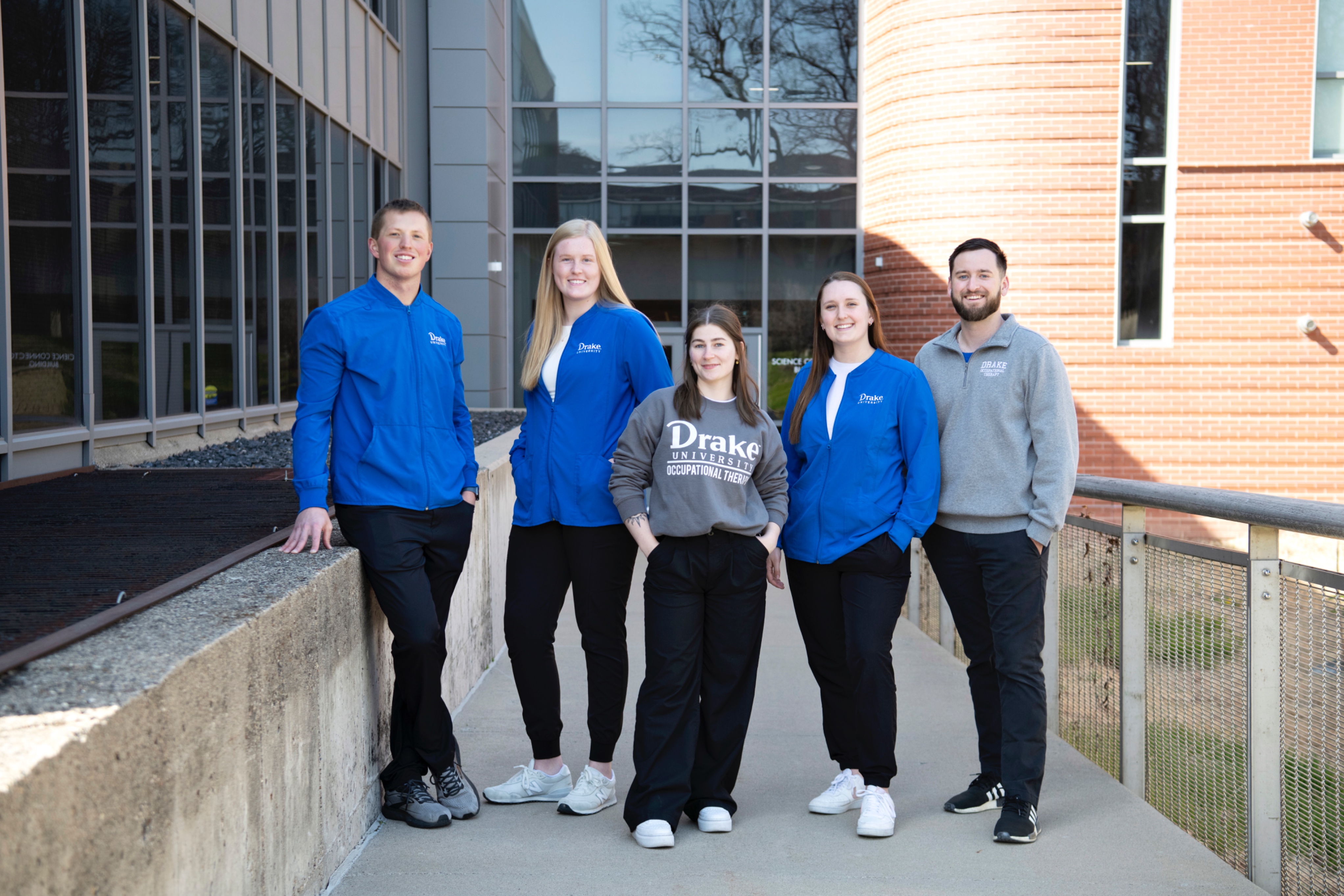
Professional Student Organizations
Enhance your career readiness by joining professional organizations like the Drake University Student Occupational Therapy Association (DUSOTA) while still an undergraduate.
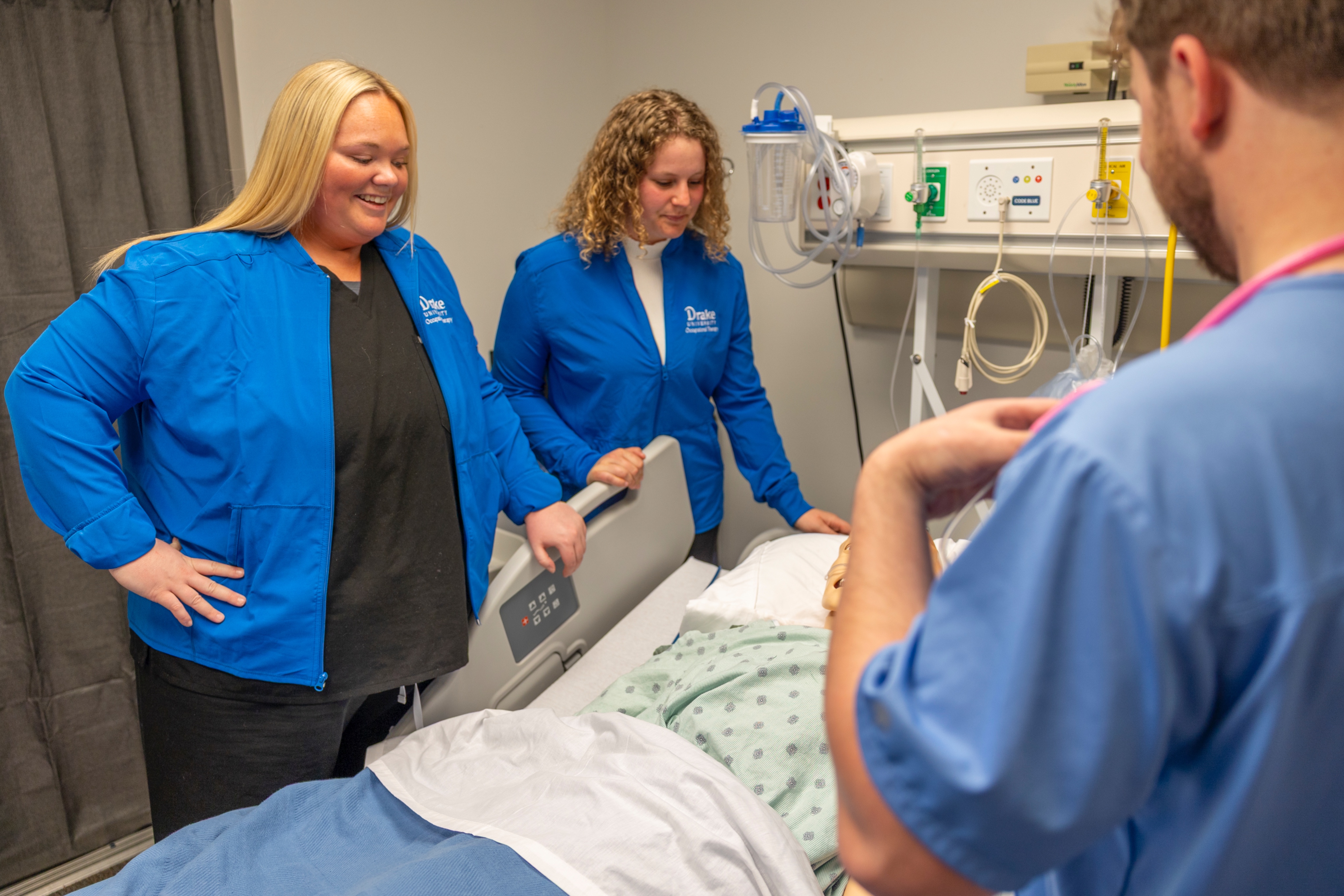
Volunteering and Career Exploration
Get a close-up view of the profession. As a Pre-OT student, you’re encouraged to seek out volunteer and other career exploratory experiences that place you in contact with various community and patient populations.
Take the Next Step
Enter a clearly defined path toward a career as an occupational therapist in Drake’s Pre-OT program.
Contact us
Lauren Sharp, MAC (she/her/hers)
Director of Enrollment Services
lauren.sharp@drake.edu
515-271-2247