
Psychology Major
Understand why humans and other animals behave the way they do through an intensive introduction to scientific inquiry that includes research, independent studies, internships, and other real-world applications in the community.
College of Arts & Sciences | On-Campus
Program Options
Our program, based on APA recommendations for Psychology majors, leads to careers in research, human services, and other roles that involve working with people or animals in a variety of capacities. Whether as a major or minor, you’ll build professional skills as you put science into action through all the research and exploratory opportunities available on or off campus, expanding your marketability in the process.
B.A. in Psychology
Understanding how humans think and behave is a valuable skill across industries and responsibilities. For students interested in business, law, or many other fields outside of psychology, the Bachelor of Arts degree provides pre-professional preparation, equipping you with skills in analytical thinking, creativity, written and oral communication, adaptability, and leadership and facilitating deeper connections to your future work.
B.S. in Psychology
With a scientific curriculum that extends beyond our department, the Bachelor of Science degree challenges our students to pursue coursework in other scientific disciplines to complement their education in psychological science, opening the door to a minor, concentration, or second major. Students graduating with a Bachelor of Science in Psychology are well-prepared for doctoral programs and other careers, and this experience offers a complement to medical school preparation.
Psychology Minor
The Psychology minor can complement your existing major. Psychology minors are exposed to the field’s core theories, research methods, and applications before exploring the topics they are most interested in through a carefully selected set of electives, in consultation with their faculty mentor.
3+2 Counseling Program
Build from psychology theories to provide empathetic, empowering guidance to individuals, groups, and families. On an accelerated track, you’ll transition from intensive undergraduate studies in Psychology after three years to enter Drake’s Master of Science in Counseling program, which is located in Drake’s School of Education. Open to B.A. and B.S. students.
3+3 Occupational Therapy Doctorate Program
Translate an understanding of the human mind and behavior into a career helping individuals lead more independent lives. On an accelerated track, you’ll spend three years on undergraduate psychology coursework before specializing in graduate coursework, where you’ll learn to assess patients’ abilities, develop treatment plans, and monitor their progress in Drake’s OTD program, which is located in Drake’s College of Pharmacy and Health Sciences. Open to B.A. and B.S. students.
Interdisciplinary Concentrations
Exploring the real-world applications of psychology, concentrations can supplement your existing major, preparing you for careers in business, non-profit organizations, working with special needs populations, or studying the behavior of wild and captive animals.
STEM Undergraduate Research Scholar Concentration
Pursue meaningful undergraduate research and work closely with faculty mentors through the STEM Undergraduate Research Scholar Concentration. This transcript-recognized program combines hands-on research, skill-building coursework, and a capstone presentation to help you develop expertise in research, analysis, and communication.
Careers & Skills
Many of our students successfully gain acceptance into medical school and quality master’s and doctoral programs in school psychology, clinical psychology, industrial/organizational psychology, experimental psychology, neuroscience, Applied Behavior Analysis, or a related discipline.
But a Psychology degree also prepares you for many more possibilities. Psychology majors can find a home in a wide range of careers, including human and social services, non-profit sectors, organizational leadership, and project management. Additionally, law, marketing, business, and other professions value the skills psychology majors bring to the table.
Career Opportunities
- Mental health
- Law
- Medicine
- Occupational therapy
- Social work
- Non-profit leadership and management
- Data analysis and project management
- Teaching
- Research
Skills
- Fundamental knowledge and comprehension of the major concepts, theoretical perspectives, historical trends, and empirical findings in the field.
- Scientific reasoning and problem-solving skills, including research methods and data analysis.
- Written, oral, and interpersonal communication skills.
- Ethically and socially responsible behaviors for professional and personal settings in an increasingly diverse landscape.
- Discipline-specific content and skills, effective self-reflection, teamwork skills, and career preparation.
- Verbal, quantitative, and critical reasoning.

Salary & Growth Outlook
The salary range for graduates with a bachelor’s degree in psychology is $36K-$76k. Salaries for Ph.D. graduates range from $65K to $120K. (American Psychological Association)
Meet the Faculty
The faculty of the Department of Psychology and Neuroscience are experts in their disciplines who regularly publish in peer-reviewed scientific journals. As teacher-scholars, they are all committed educators in the classroom and in their research labs, where they welcome students to make discoveries alongside them.










Outside the Classroom
Take advantage of Drake’s culture of research to pursue your interests and develop skills you’ll use in your future career. Our curriculum encourages experiential opportunities in community-engaged learning, including through internships and partnerships with local non-profit organizations. For Psychology majors, these experiences also strengthen your graduate school applications to medical school, law school, master’s, and Ph.D. programs, as well as your résumé for related-career paths.

Faculty Research
Drake’s Psychology and Neuroscience faculty are deeply involved in understanding cognitive processes, behavior, and the brain itself. Recent examples focus on experiences of neurodivergent individuals in healthcare settings to identifying gene variants that regulate responses to drugs of abuse in fruit flies. You'll join them and gain experience designing, executing, and interpreting scientific research. Our department conducts research in clinical, cognitive, social, developmental, and other psychology subdisciplines.

Independent Study and Capstone Research
If you’re curious about a question and its conclusion, opportunities exist to join a research team and collaborate with a faculty member to develop your own research study. In addition to a for-credit capstone project, you’ll have the opportunity to conduct independent studies during your undergraduate studies.

Drake University Conference on Undergraduate Research in the Sciences (DUCURS)
After conducting research under the direction of faculty mentors, Drake Psychology students are invited to present their research projects at DUCURS, where they showcase their team’s results and learn what other departments have discovered. In addition to DUCURS, our students regularly present at regional, national, and international conferences, such as the Midwestern Psychology Association, Association for Psychological Science, and Society for Neuroscience.
Facilities
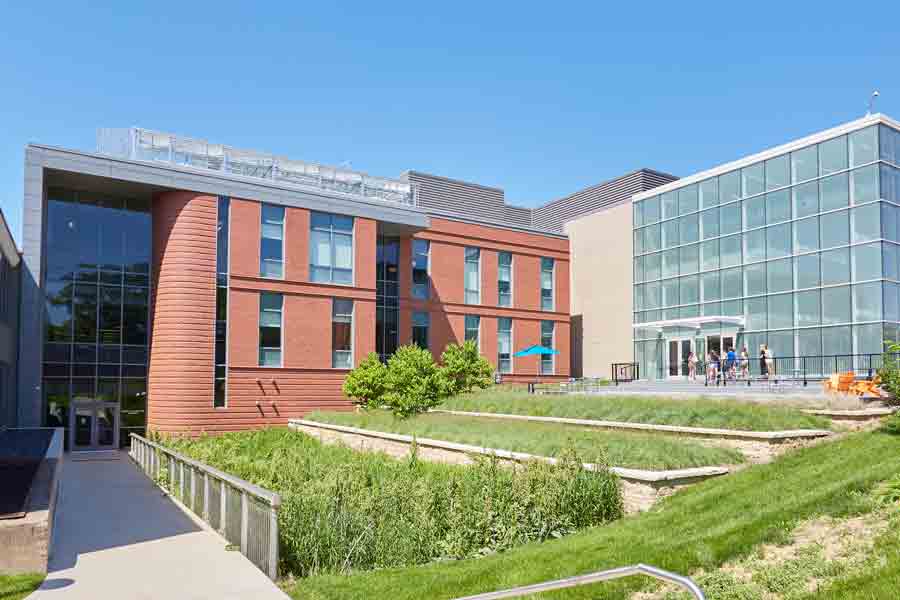
Learn modern research techniques in our human observation suite with specialized computer equipment, including an eye-tracking device and reaction-time-based programs, a state-of-the-art animal research facility, and individual research labs set up for various faculty members to conduct their research.

Internships
Students may complete paid or volunteer internships in clinical, counseling, and school psychology, industrial/organizational psychology, and assessment, including in hospitals, mental health and social service agencies, law firms, policy development and criminal investigation organizations, and businesses in the Des Moines area and beyond. In close consultation with Career Services and Community Engaged Learning, students are supported in identifying an internship site that fits their interests.
Student Organizations
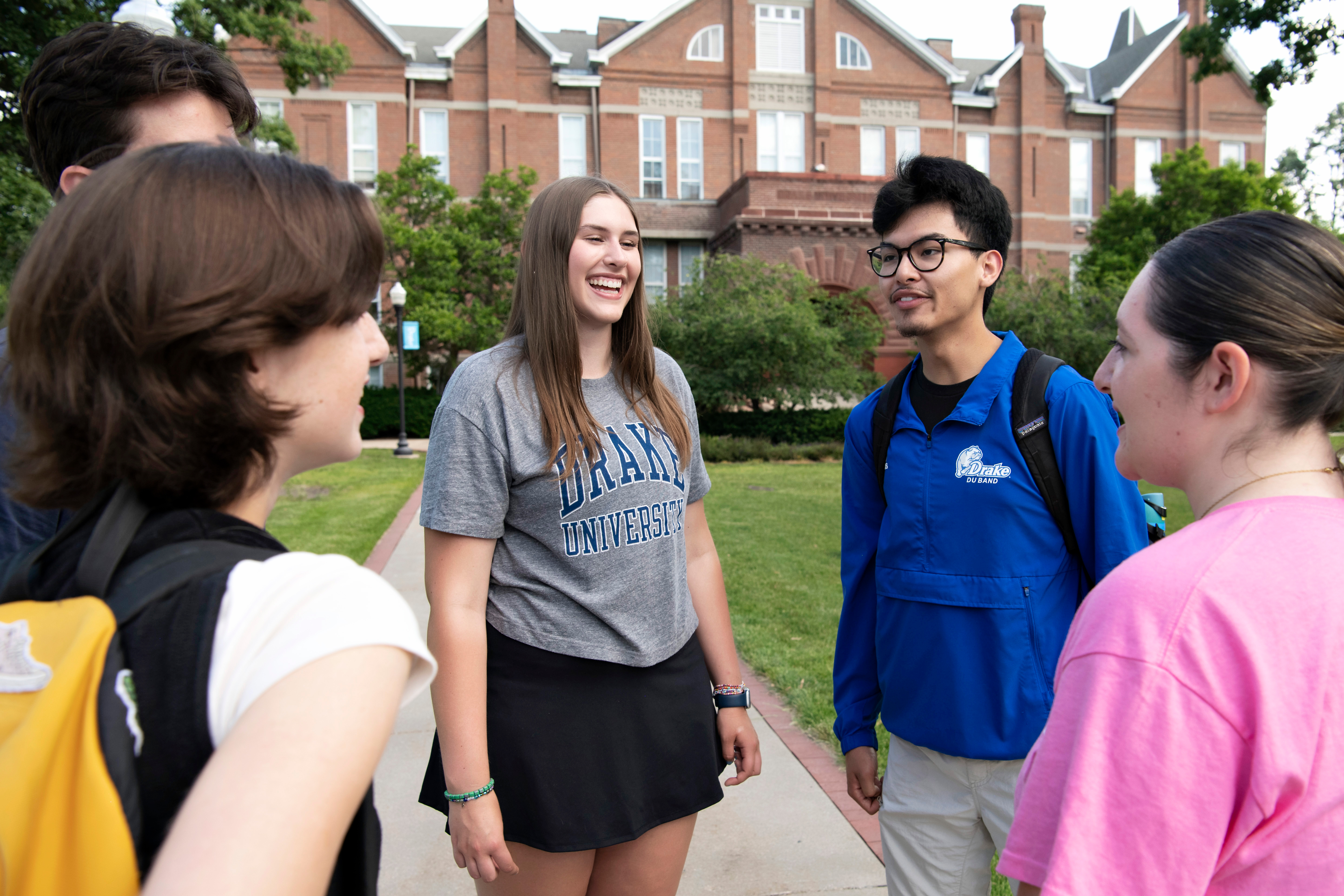
Join Drake's chapter of the National Alliance on Mental Illness (NAMI) on Campus, where you can coordinate campus events related to mental health. Or connect over shared interests in Drake’s Psychology Club, Green Bandana, and other psychology-related clubs and organizations. Drake students also have the opportunity to become a QPR suicide prevention gatekeeper.
Take the Next Step
A Psychology degree from Drake combines the rigorous coursework and extensive hands-on opportunities you’ll use to build a career in this field and many others.